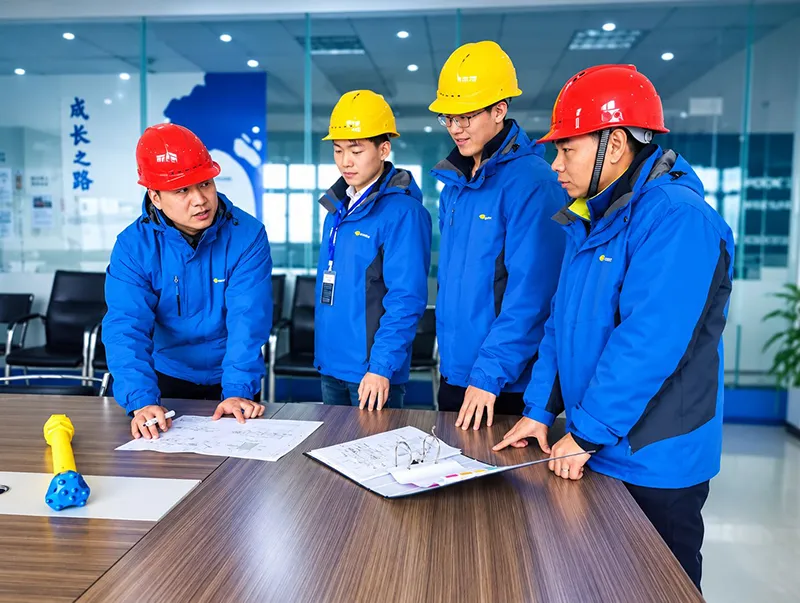
Project Background
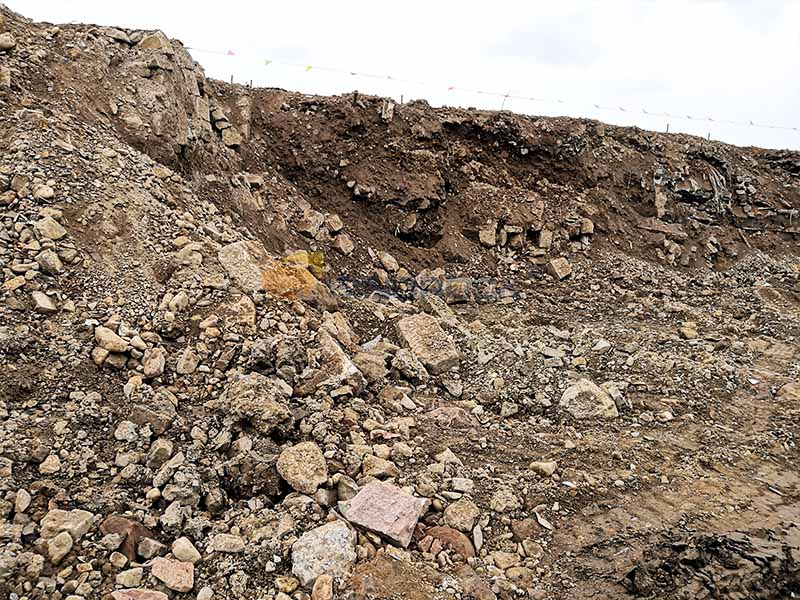
This project involved the construction of a commercial and cultural tourism street district, located near a river. On the north side were 2–3 story brick-structured old residential buildings. The project site was densely packed with pipelines and adjacent structures, with high safety requirements and a tight schedule. The support construction needed to be fast, cost-effective, and must not impact nearby historical buildings or public facilities.
Challenges
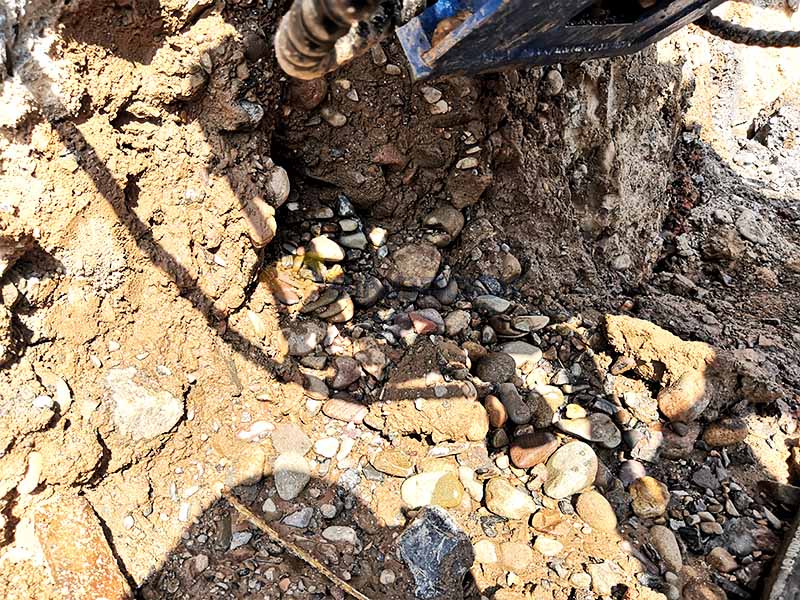
Complex Geological Conditions
The soil and rock layers at the site, from top to bottom, include miscellaneous fill, silt, fine sand, rounded gravel, highly weathered siltstone, highly weathered phyllite, moderately weathered siltstone, and moderately weathered phyllite, with large amounts of construction debris, making geological conditions complex.
Construction Difficulties
According to the design, anchors needed to pass through adjacent support piles and drill into the gravel and highly weathered layers. Drilling through the gravel layer is extremely difficult; conventional methods require casing drilling, which is low in efficiency, high in cost, and can cause secondary damage to the surrounding environment due to water circulation.
Limited Budget
The project required a short construction period and controllable costs for foundation pit support, which traditional methods could not meet.
Solution
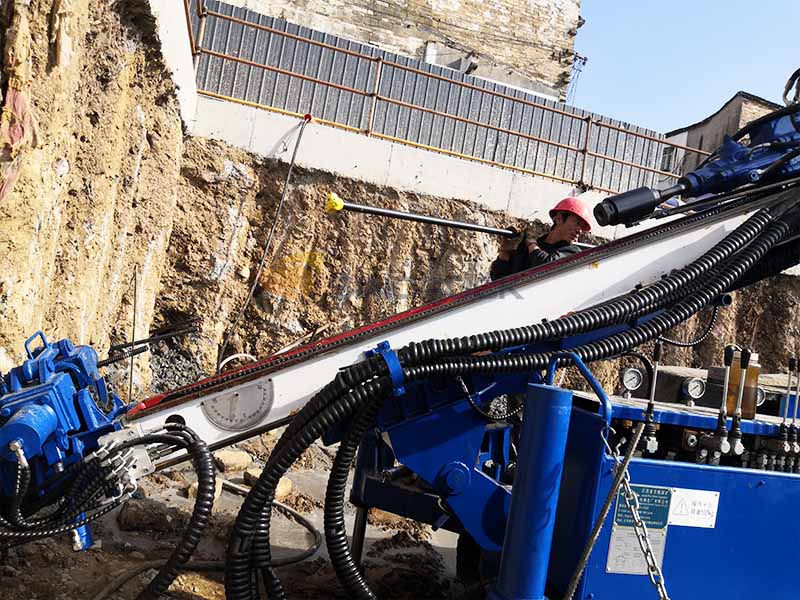
The Sinorock R38 self-drilling anchoring system was adopted. This system consists of a hollow anchor rod, coupler, centralizer, drill bit, bearing plate, and nut, integrating drilling, grouting, and anchoring functions. It enables simultaneous drilling and grouting, effectively solving collapse issues without additional casing.
- Anchor Specifications: SER38/18 self-drilling hollow anchor, 3 meters per segment, extended to the design length (18m or 15m) with couplers.
- Drill Bit: SSR38/90 all-steel ball tooth drill bit, 90mm diameter.
- Grouting Parameters: Gravity grouting (pressure 0.3–0.5 MPa) using pure cement slurry with a water–cement ratio of 0.5–0.55, or cement–sand slurry with a ratio of 1:0.5–1:1; grout compressive strength 20 MPa.
- Cement type: P.O 32.5 ordinary Portland cement.
- Anchor Layout: Two rows of anchors, horizontal spacing 1.6m, inclination angle 30°, first row 18m, second row 15m.
- Supporting Equipment: Dedicated self-drilling anchor rig and rotary grouting adapter.
Construction Process
Layered excavation → Equipment positioning → Simultaneous drilling and grouting → Extend anchors to design depth → Install channel steel, bearing plates, and nuts → Complete support.
Results
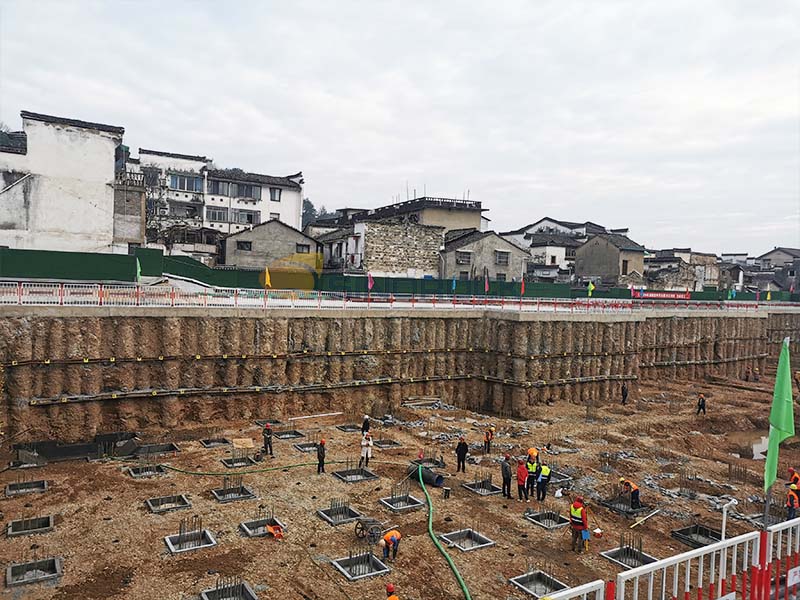
- High Drilling Efficiency: Average drilling time per 3m segment was approximately 105.6 seconds, with a maximum drilling depth of 18m. Overall efficiency far exceeded conventional casing drilling.
- Simplified Procedure: Integrating drilling, grouting, and anchoring eliminated the need for separate steps, significantly shortening the schedule.
- Adapted to Complex Environment: Compact equipment with low noise and vibration caused no impact on nearby old residences, pipelines, or the river embankment, successfully completing work in tight spaces.
- Adequate Anchor Strength: Design pull-out test value of 15 kN/m; actual anchoring met design requirements.
- Cost Control: Overall costs were significantly lower compared to casing drilling.
Client Feedback
The construction team highly praised Sinorock’s self-drilling anchoring system. The method successfully addressed long-standing difficulties of drilling through miscellaneous fill and gravel layers. It provided high efficiency, safety, and minimal disturbance to the surrounding environment. The client noted the clear advantages of self-drilling anchors for foundation pit support in similar geological conditions.