After the anchor bar reaches the required installation depth, cement-based grout is pumped through its hollow core and discharged near the drill bit. The grout fills the space between the bar and the surrounding ground and may penetrate accessible cracks and voids. Once the grout cures, it bonds the anchor bar to the surrounding material, helping transfer forces through the grout-ground interface.
Proper grout selection, mixing, injection, and curing are important for achieving the required anchoring performance.
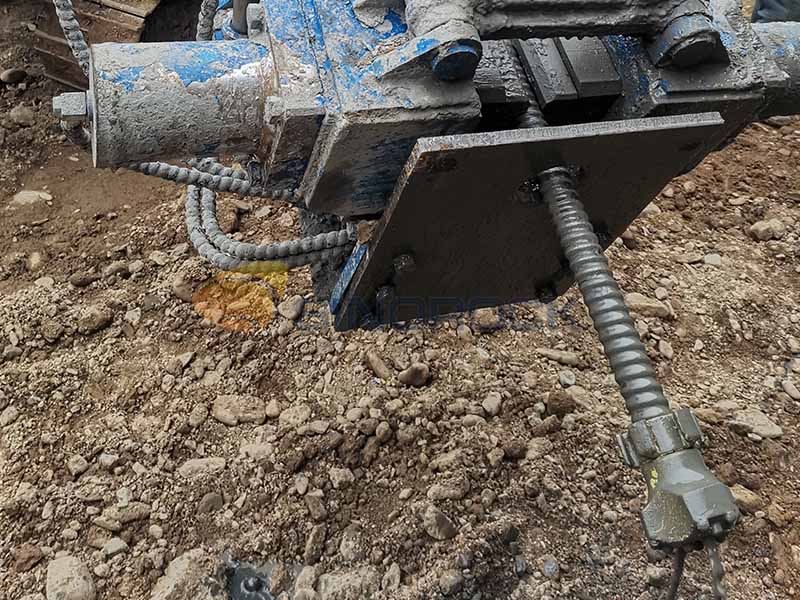
Self-drilling rock bolts are particularly useful in unstable or fractured ground because they do not require a separate open borehole to be maintained before the anchor is installed. In conventional systems, a pre-drilled hole may collapse or become obstructed before installation can be completed.
With a self-drilling system, the hollow anchor bar remains in the ground during drilling. Grout is then injected through the bar to fill the surrounding space and penetrate fractures where accessible, helping establish a bond between the reinforcement and the ground.
Actual grouting procedures should follow the project specifications and applicable engineering requirements.