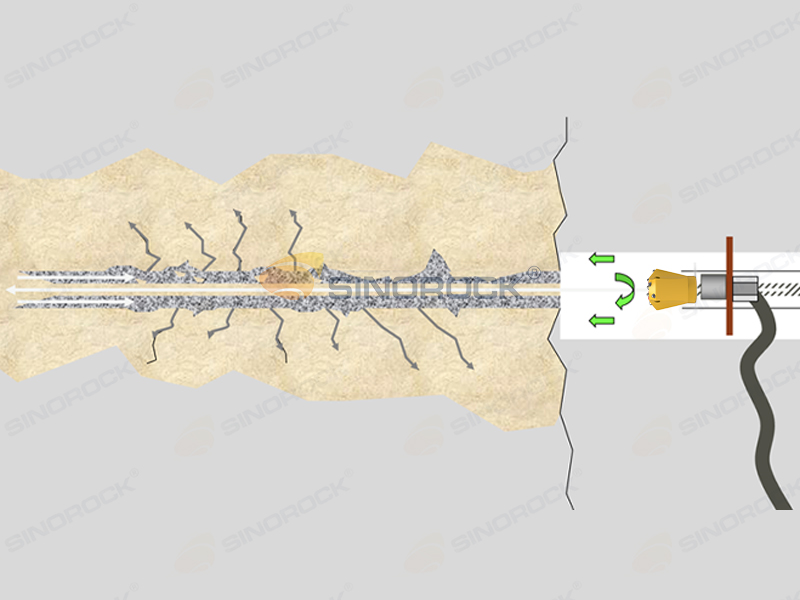
Rock Bolt Manufacturer & Rock Reinforcement Solutions

Sinorock is a leading manufacturer of anchoring solutions, specializing in the development, production, and global supply of high-quality anchoring products.

With over 20 years of manufacturing experience, our products are used in more than 80 countries worldwide.

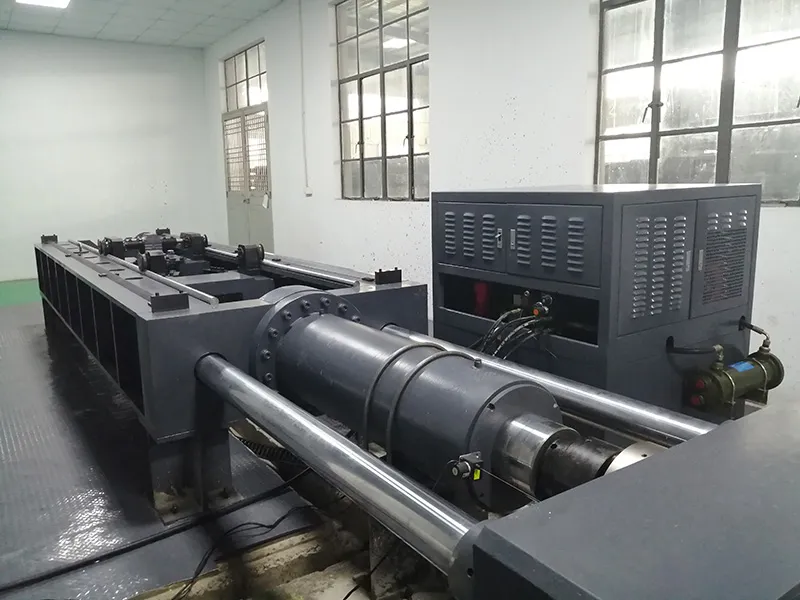
Operating two production facilities with over 100 advanced machines and 20 automated hollow anchor bar production lines, Sinorock is Asia’s leading supplier of large-diameter self-drilling anchor bars, with manufacturing capabilities up to 200 mm in diameter.

Product Categories

Sinorock provides reliable self-drilling anchor systems and rock reinforcement products engineered for challenging construction environments worldwide

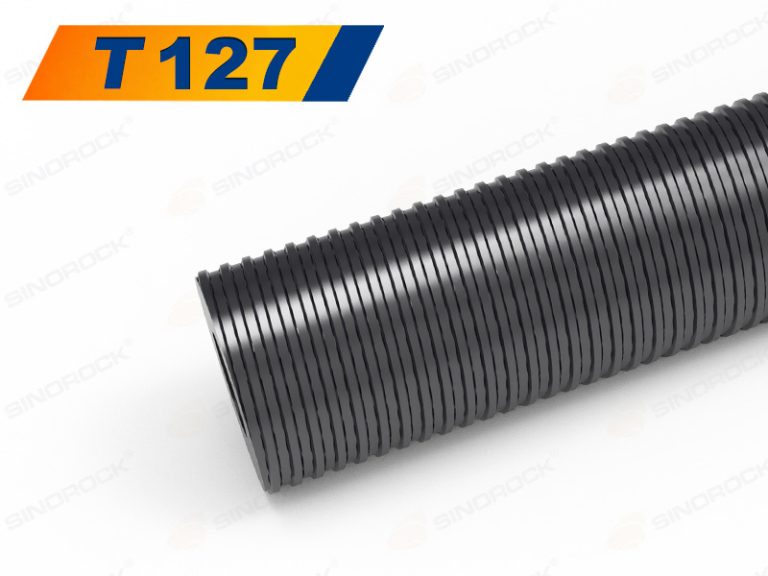
T127 Self-Drilling Anchor Bolt
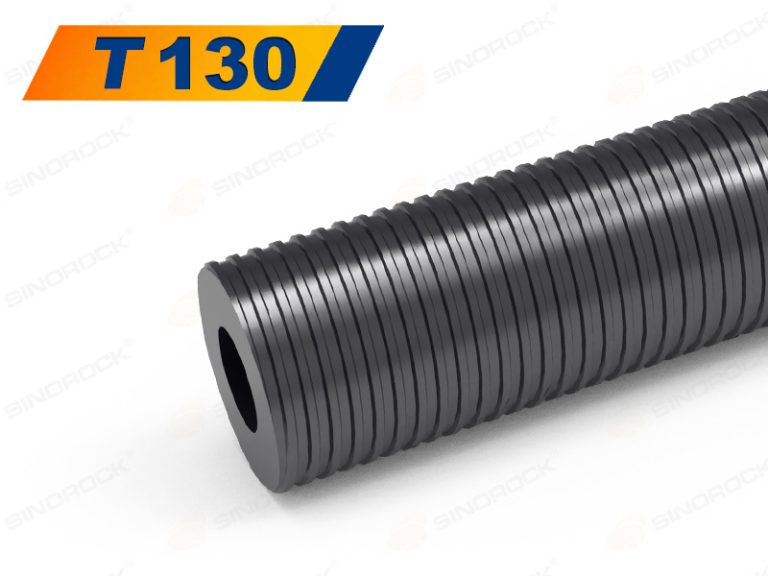
T130 High-Capacity Self-Drilling Hollow Anchor
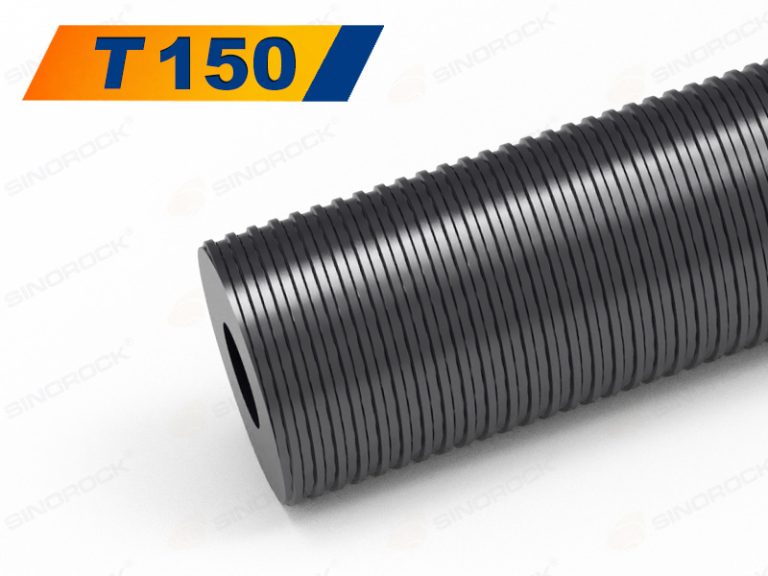
T150 Heavy-Duty Self-Drilling Anchor Bolt
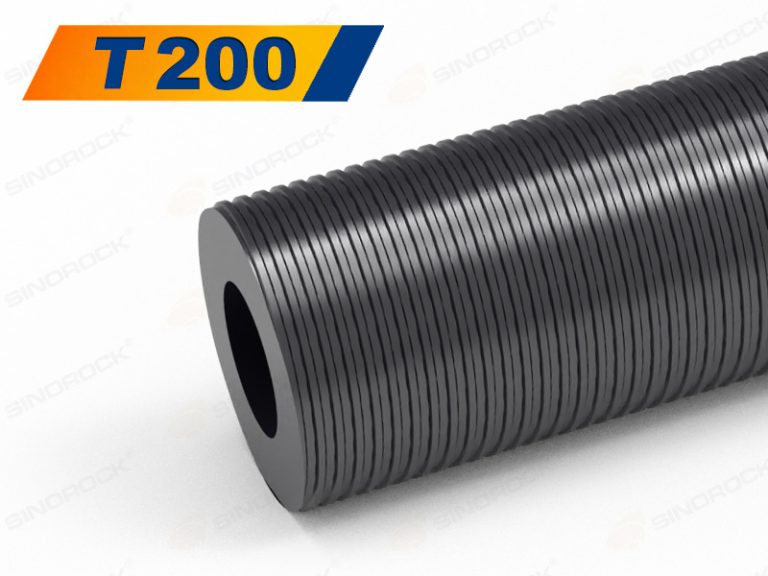
T200 Extra-Large Hollow Anchor Bar
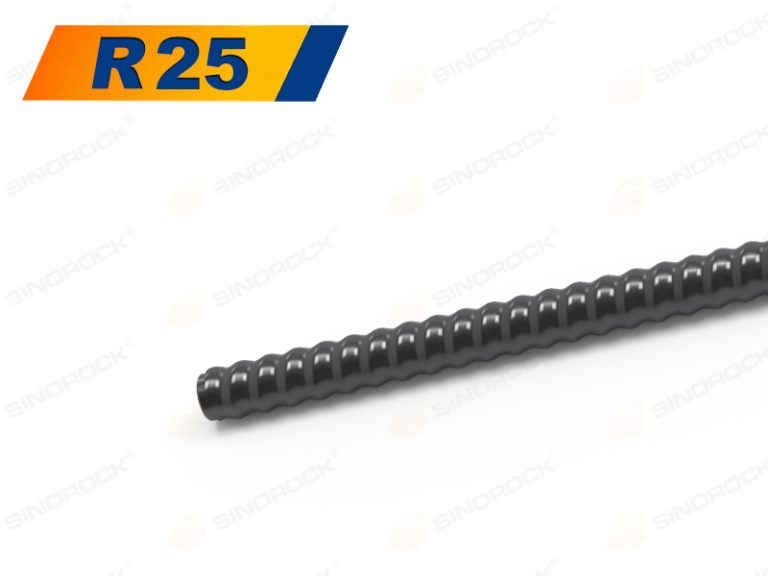
R25 Self-Drilling Anchor Bolt
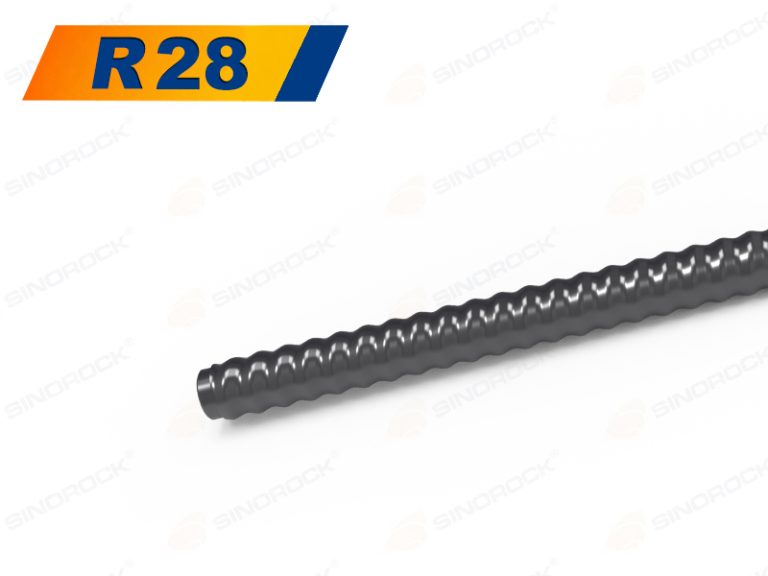
R28 SDA Bolt
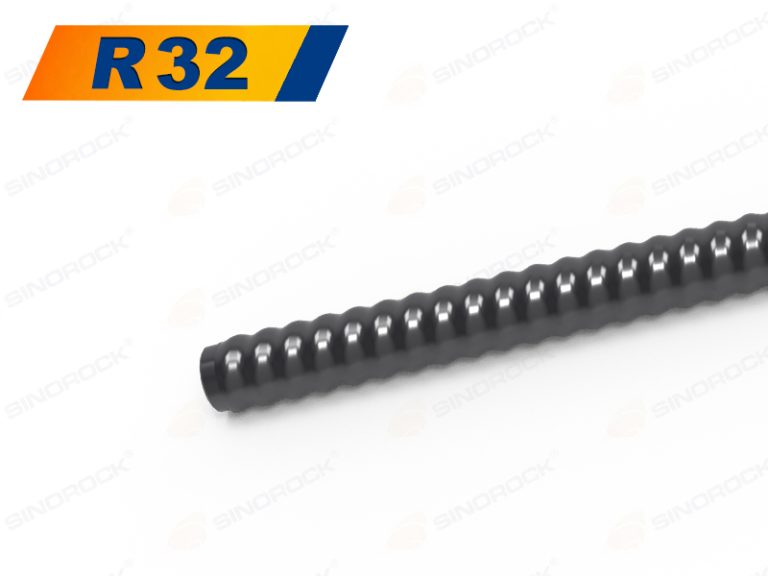
R32 Self-Drilling Rock Bolt
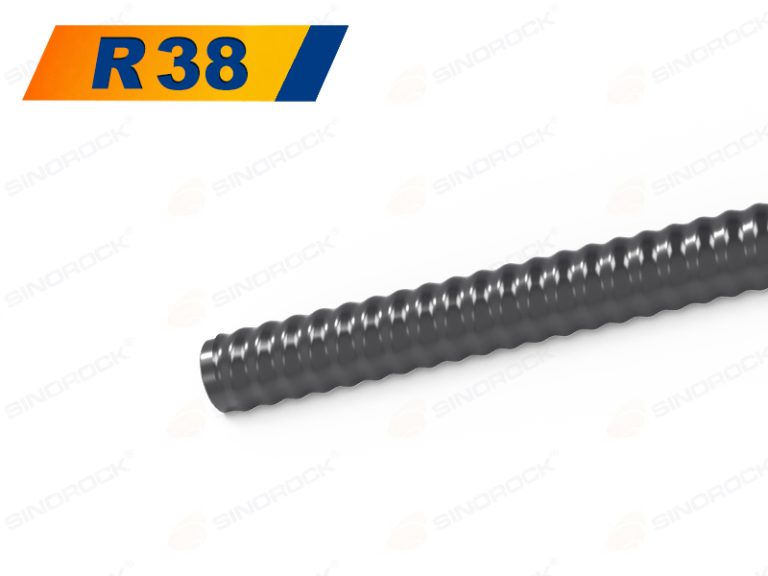
R38 Self-Drilling Anchor Bolt
T127 Self-Drilling Anchor Bolt
T130 High-Capacity Self-Drilling Hollow Anchor
T150 Heavy-Duty Self-Drilling Anchor Bolt
T200 Extra-Large Hollow Anchor Bar
No posts found
High-Elongation Self-Drilling Anchor Bolt System

The high-elongation self-drilling anchor bolt system is a solution developed for highly deformable ground conditions. With an elongation of A ≥ 15%, it can accommodate ground deformation through controlled elongation, absorb deformation energy, and help maintain surrounding rock stability.

High-Strength Self-Drilling Anchor Bolt System

The high-strength self- drilling anchor bolt system is a high-performance geotechnical support solution designed for high-load and demanding ground conditions. With tensile strength of 900–1,200 MPa or higher, it provides enhanced load-bearing capacity and pull-out resistance while maintaining a compact cross-sectional size.

low-carbon self-drilling anchor bolt system

The low-carbon self-drilling anchor bolt system is a solution designed for efficient ground reinforcement with reduced carbon emissions. Manufactured from low-carbon alloy steel with optimized material and production methods, helps reduce material-related energy consumption and carbon emissions while maintaining effective construction performance.

Applications

Reliable Solutions for
Mining Operations

Self-drilling rock bolts provide efficient support for open-pit slopes and underground excavations. They improve rock stability, accelerate excavation progress, and reduce overall support costs in challenging mining conditions.

Advanced Solutions for
Safe Tunnel Construction

Designed for demanding tunnel environments, self-drilling anchor systems enhance ground stability and improve construction efficiency.

Strong Solutions for
Foundation Projects

Self-drilling anchor bolts effectively transfer structural loads, improve bearing capacity, and provide reliable reinforcement for foundations, bridges, towers, and other critical infrastructure projects.

Effective Solutions for
Slope Stabilization

Self-drilling rock bolts strengthen unstable slopes by resisting tensile and shear forces. They are widely used for slope protection, retaining structures, rockfall prevention, and embankment stabilization.

OUR SERVICE ADVANTAGES
Shield Icon Enlarged

20+ YEARS OF EXPERTISE

Extensive experience in geotechnical anchoring, delivering optimized solutions for diverse geological and construction conditions.

Gear Icon Enlarged

FULL-PROCESS SERVICE

Supporting every project stage from investigation and testing to training and site assistance, ensuring efficient and successful implementation.

Latest News

Company News

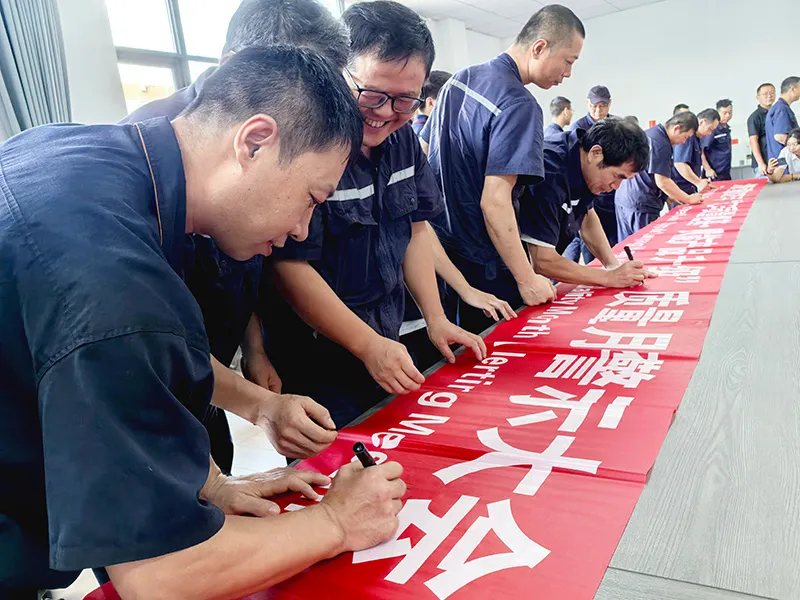
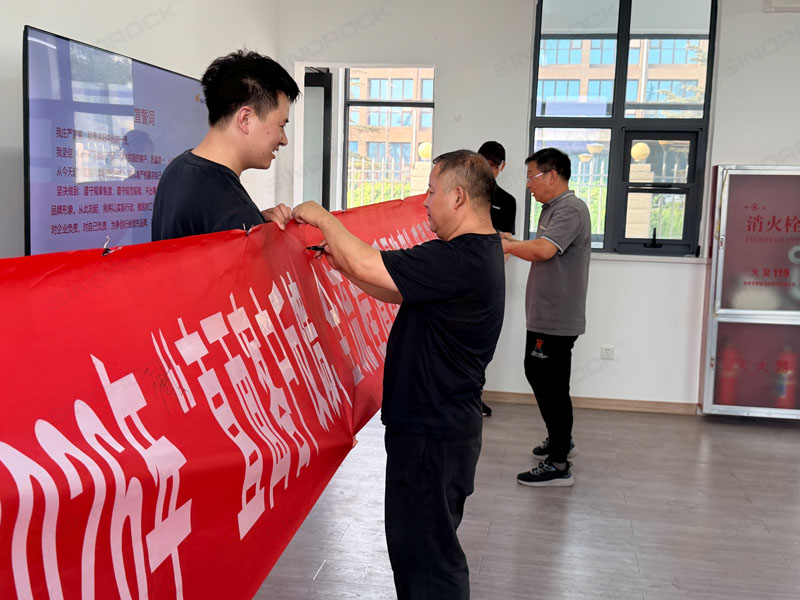
July 2026 — SINOROCK successfully completed its annual Quality Month Campaign with the theme of “Addressing Customer Feedback and Eliminating Quality Risks Across the Entire Process.”

The campaign aimed to strengthen employees’ quality awareness, encourage full participation in quality management, and build a company-wide culture where everyone values, contributes to, and continuously improves product quality.

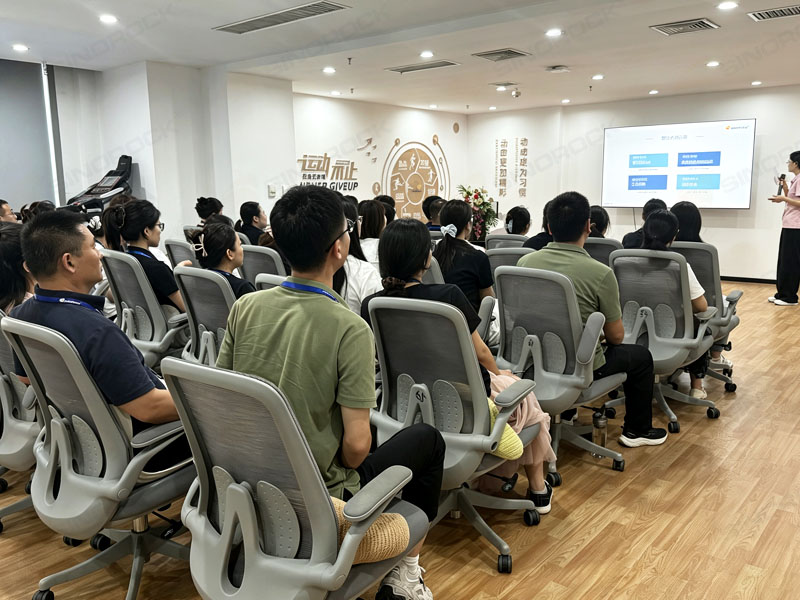
Throughout the month, SINOROCK organized a series of activities, including quality awareness meetings, customer complaint reviews, quality risk inspections, quality knowledge competitions, professional training sessions, and internal quality communication activities. These initiatives further integrated quality management into every department and every stage of production.

Customer Feedback Drives Continuous Improvement

Customer Feedback Drives Continuous Improvement

Customer feedback is an essential source for identifying potential quality issues and improving products and processes.

During Quality Month, SINOROCK conducted customer complaint review meetings, analyzing real cases from customer feedback, identifying root causes, and developing targeted improvement measures.

Through these case studies, employees gained a deeper understanding of how product quality impacts customer satisfaction and project performance. By transforming customer feedback into practical improvement actions, SINOROCK continues to optimize its quality management system and enhance product reliability.

Quality Is Everyone’s Responsibility

Quality Is Everyone’s Responsibility

Quality is not only the responsibility of the quality department — it is a commitment shared by every employee.

During the “Everyone Talks About Quality” communication sessions, employees from different positions shared their understanding of quality based on their daily work and responsibilities.

At the same time, SINOROCK organized a company-wide quality risk inspection activity. Employees actively participated in identifying potential risks within production processes, reporting issues, and proposing improvement suggestions.

These activities helped strengthen employees’ ability to identify and prevent quality problems, promoting a transition from “solving problems after they occur” to “preventing problems before they happen.”

Improving Skills Through Learning and Competition

SINOROCK 2026 Quality Month

To further enhance employees’ professional knowledge and practical quality control capabilities, SINOROCK carried out various training sessions and competitions during Quality Month.

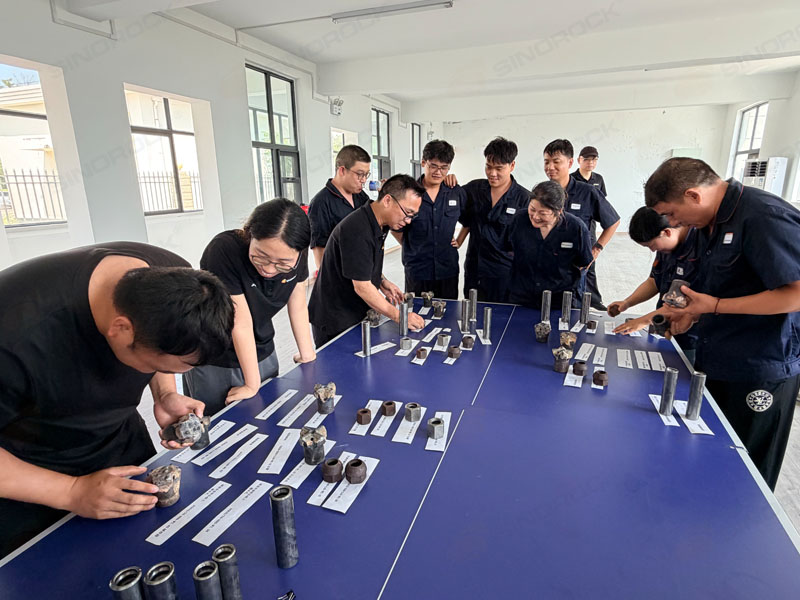
The “Product Matching Challenge” focused on 15 similar and easily confused product types. Participants were evaluated on their product identification accuracy and completion efficiency, improving their understanding of product specifications and classifications.

SINOROCK also organized a Quality Knowledge Competition featuring a 200-question quality knowledge database. The competition combined theoretical knowledge with real quality cases from company records, helping employees better understand quality standards and practical problem-solving methods.

In addition, professional training sessions were conducted, including:

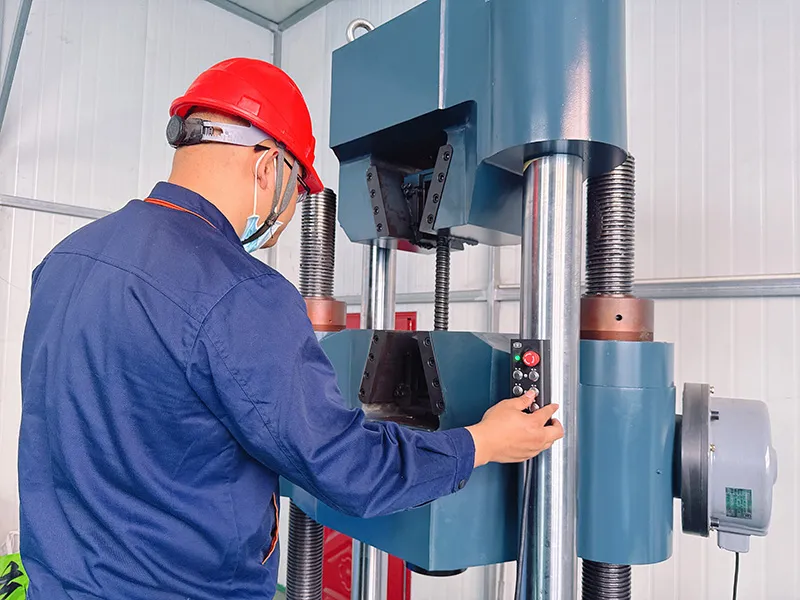
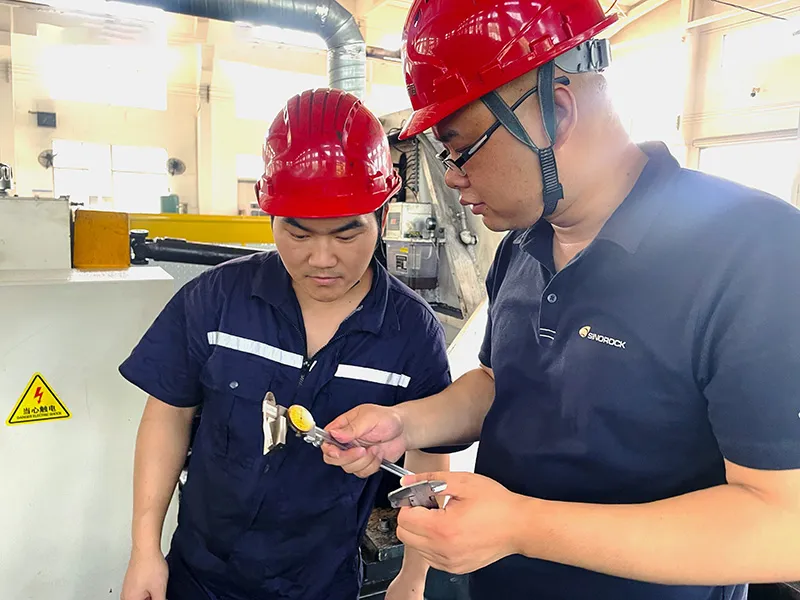
  • Hardness tester operation training;
  • Product inspection knowledge sharing;
  • Inspection procedures and standards training;
  • Product inspection specification training.

These programs further improved employees’ capabilities in product inspection, process control, and quality assurance.

Strengthening Quality Awareness Through Real Cases

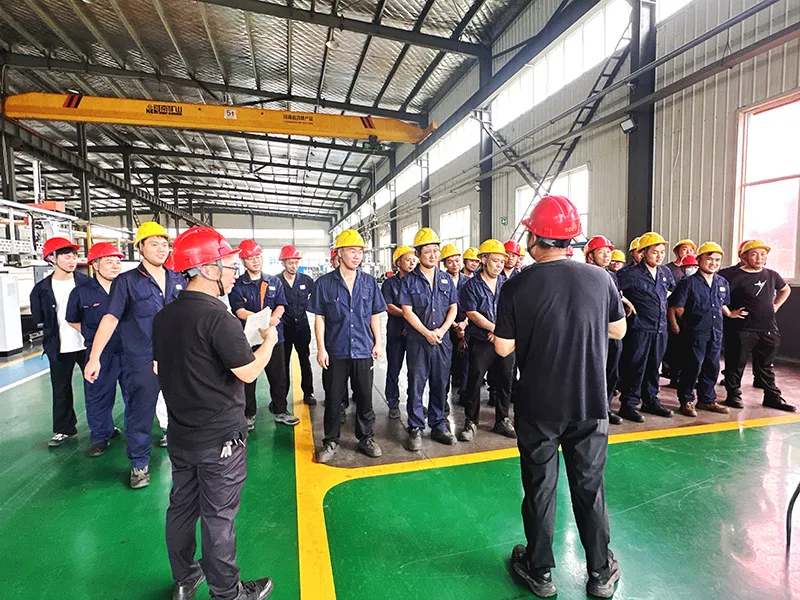
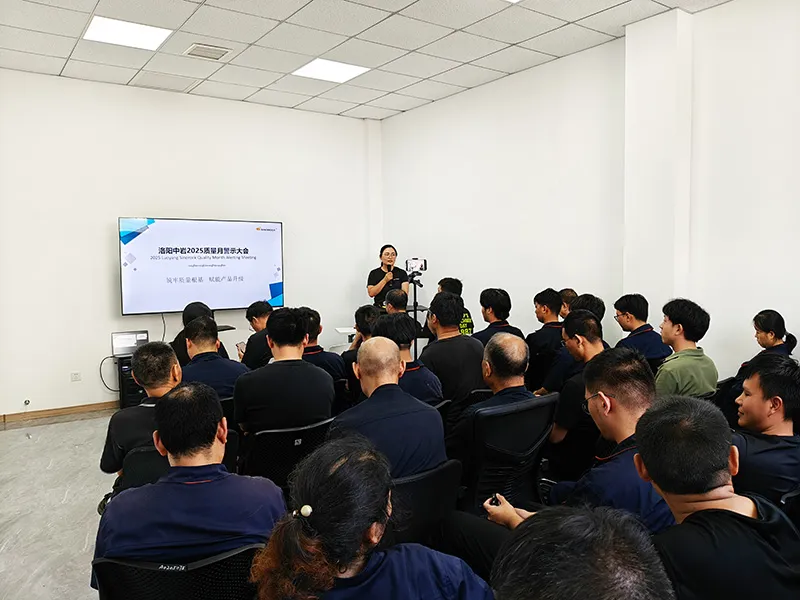
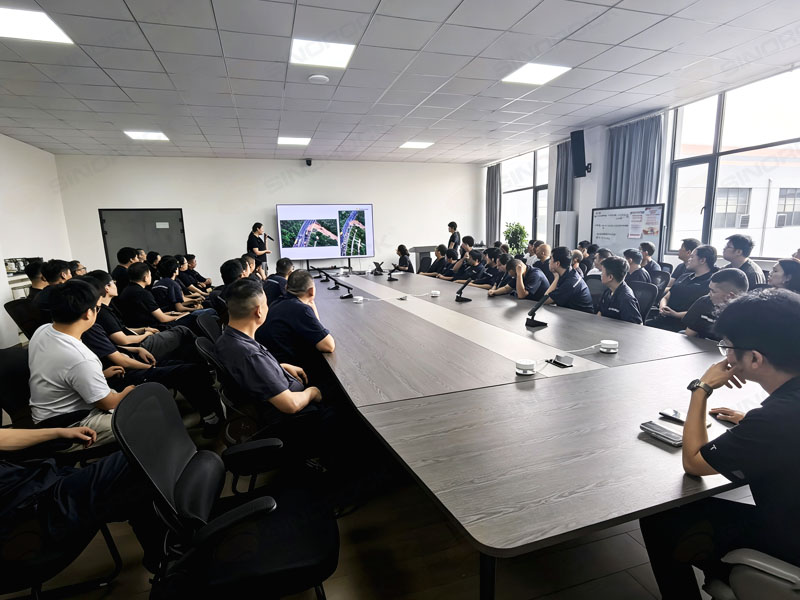
During Quality Month, SINOROCK held quality awareness meetings in different locations.

On July 13. the Quality Warning Conference was organized in Changzhou. On July 14. similar meetings were held at the Luoyang office and Luoyang branch.

Through reviewing quality-related cases and sharing lessons learned, these meetings further reinforced employees’ understanding of the importance of product quality and encouraged everyone to take greater responsibility for quality improvement.

Quality Is a Long-Term Commitment

Quality Is a Long-Term Commitment

Although Quality Month was carried out throughout July, SINOROCK’s commitment to quality improvement extends far beyond a one-month campaign.

Through meetings, practical training, competitions, inspections, and internal communication activities, quality awareness has been further integrated into daily operations.

“Addressing Customer Feedback and Eliminating Quality Risks Across the Entire Process” represents not only the theme of the 2026 Quality Month Campaign but also SINOROCK’s long-term commitment to customer-oriented quality management.

Moving forward, SINOROCK will continue to focus on customer needs, strengthen quality control throughout the entire production process, proactively identify and eliminate potential risks, and continuously improve product quality and service capabilities.

Driven by continuous improvement and a strong commitment to quality, SINOROCK will continue providing reliable, high-quality self-drilling anchor bolt products and engineering solutions to customers worldwide.

Industry News

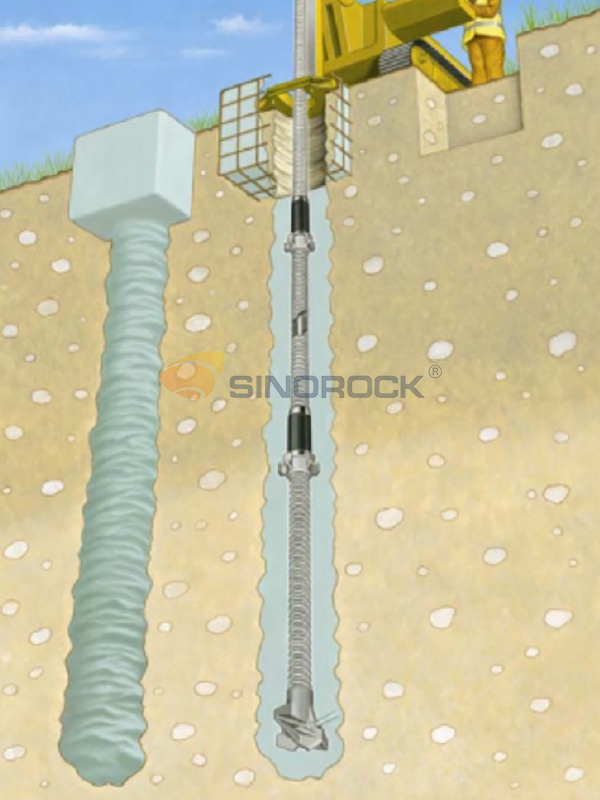
An SDA bolt integrates drilling, reinforcement, and grouting into a single system. Instead of drilling a borehole first and installing a separate reinforcing element afterward, the hollow threaded anchor bar itself functions as the drill string during installation and remains in the ground as the permanent reinforcement element.

This integrated approach can simplify installation, reduce the number of separate operations, and provide greater adaptability to challenging ground conditions. However, understanding how an SDA system works requires more than simply knowing what the abbreviation stands for. The bar, drill bit, coupler, anchorage components, flushing method, grout, and surrounding ground all contribute to the performance of the completed system.

This guide explains what an SDA bolt is, how it works, its main components and types, common installation methods, and why simultaneous drilling and grouting can be important in difficult ground conditions.

What Does SDA Stand For?

What Does SDA Stand For

SDA stands for Self-Drilling Anchor.

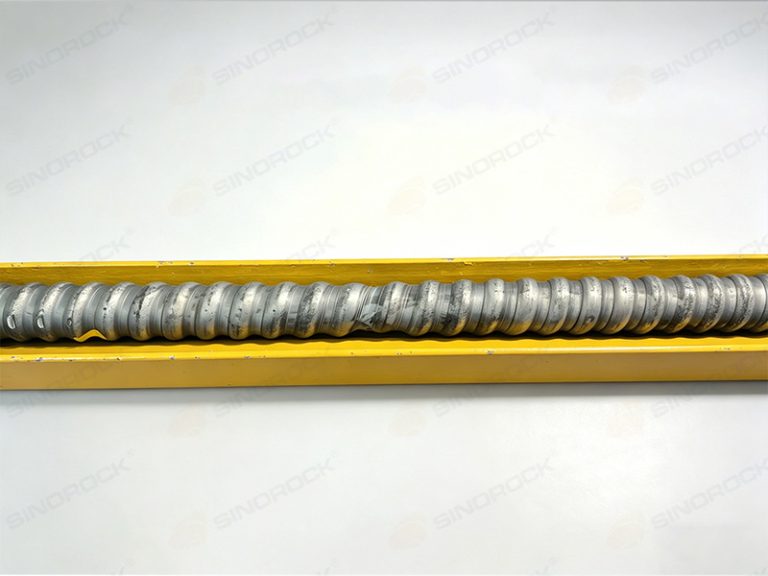
An SDA bolt is generally based on a hollow threaded steel bar. A compatible sacrificial drill bit is attached to the leading end of the bar, allowing the bar to function as the drill string during installation.

The hollow center has two important functions:

  • Flushing during drilling — air, water, foam, or grout can be introduced through the hollow bar depending on the installation method and ground conditions.
  • Grouting — cementitious grout can subsequently be injected through the bar to fill the annular space and form the bond between the steel reinforcement and surrounding ground.

Understanding what “SDA” stands for provides the basic definition, but it does not fully explain how the system differs from conventional anchors. To understand its engineering characteristics, it is useful to look more closely at what an SDA bolt actually is and how its hollow-bar design functions during installation.

What Is an SDA Bolt?

What Is an SDA Bolt

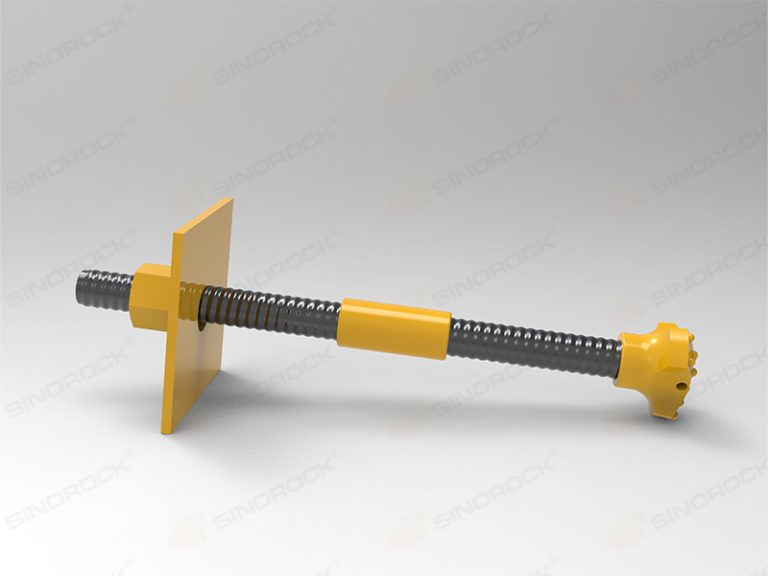
A Self-Drilling Anchor (SDA) Bolt is a hollow, continuously threaded steel anchor designed to perform drilling, reinforcement, and grouting as an integrated installation system. Unlike conventional anchoring methods, where a borehole may be drilled first and reinforcement installed afterward, an SDA bolt is installed together with a sacrificial drill bit and can remain in the ground as the permanent reinforcing element.

The hollow bar provides a passage for flushing media during drilling and for grout during installation. Once installed and grouted, the steel bar, grout, and surrounding ground work together to form a ground-reinforcement system.

The concept is particularly relevant where borehole stability, difficult ground conditions, restricted access, or the need to integrate drilling and grouting into fewer operations are important considerations.

An SDA bolt is therefore not simply a hollow steel bar with a drill bit. It is a complete anchoring system in which multiple components work together during drilling, grouting, and load transfer. Each component has a specific role in the installation and performance of the finished anchor.

SDA Bolt Components

SDA Bolt Components

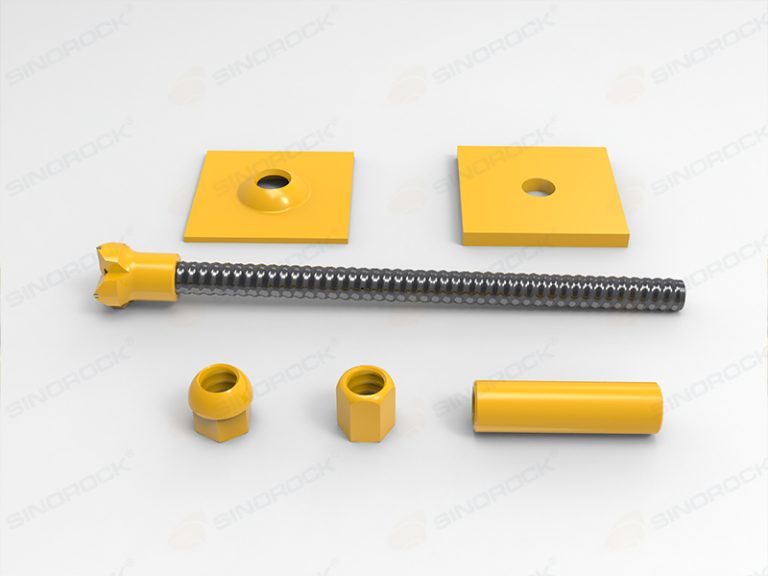
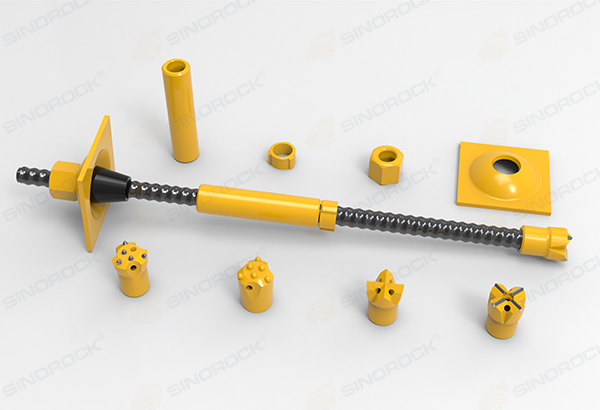
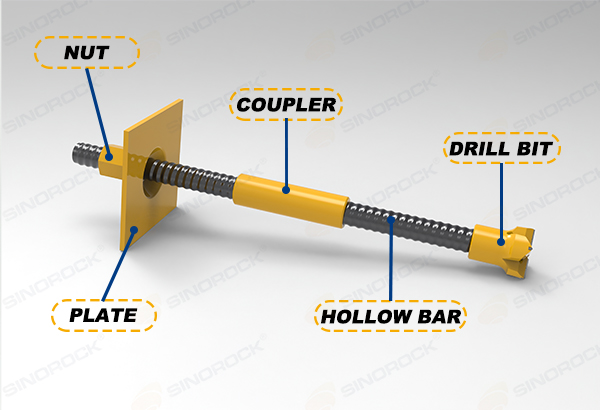
The performance of an SDA system depends on the compatibility of its individual components. Although the hollow anchor bar is the primary structural element, the drill bit, coupler, bearing plate, nut, and centraliser all contribute to installation efficiency, load transfer, and grout coverage.

Hollow Anchor Bar

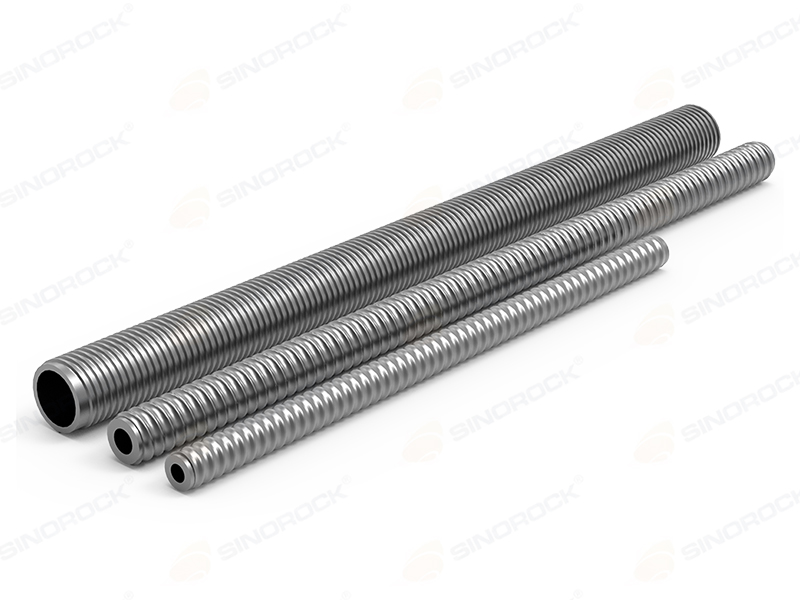
The hollow anchor bar is the primary structural component of an SDA system. It combines a continuous external thread, a hollow internal passage, a structural steel section, and connection capability

The continuous thread allows the bar to be cut or extended according to project requirements while maintaining compatibility with couplers and anchorage components.

While the hollow anchor bar provides the structural backbone of the system, it cannot perform the drilling operation by itself. A compatible drill bit is required to penetrate the ground and create the drilled hole.

Drill Bit

The drill bit is attached to the end of the SDA bar and performs the drilling operation.

Different drill-bit configurations can be selected according to the geological formation. The available designs include various cross, three-blade, button, concave, and clay-bit configurations.

The drill bit is generally selected based on factors such as:

  • Soil or rock formation
  • Ground hardness
  • Presence of gravel
  • Fractured rock
  • Drilling method
  • Required borehole diameter
  • Flushing method

For many SDA applications, the drill bit is sacrificial and remains underground together with the anchor bar.

Because SDA bars can be installed to considerable depths, multiple bar sections may be required during drilling. Extension couplers provide the mechanical connection needed to continue the drilling operation without replacing the installed bar with a separate reinforcement element.

Extension Coupler

Extension couplers connect individual SDA bars together. They allow the system to achieve the required anchor or pile length without requiring a single bar manufactured to the full installation depth.

The coupler must be compatible with the corresponding SDA thread and designed to maintain the required mechanical connection.

Once the required anchor length has been achieved and the bar has been grouted, the load must be transferred from the steel reinforcement to the surrounding structure or facing. This is the role of the anchorage components.

Bearing Plate and Nut

The bearing plate distributes the load from the anchor head to the surrounding structure or facing system.

The nut secures the SDA bar against the bearing plate and completes the anchorage assembly.

These components are particularly important in soil and rock nailing, slope stabilization, and other applications where the anchor head must transfer forces to a facing or structural element.

In addition to the anchorage components, maintaining an appropriate position of the bar within the drilled hole can influence grout coverage and the resulting steel-to-grout interface. A centraliser can therefore be used where required by the system or installation design.

Centraliser

A centraliser helps maintain the position of the SDA bar within the drilled hole and supports more consistent grout coverage around the bar.

With the main SDA components identified, the next consideration is the selection of the anchor bar itself. SDA systems are available in different diameters, thread configurations, and steel grades, allowing the system to be selected according to the required mechanical and installation performance.

SDA Anchor Bar Types and Mechanical Properties

SDA Anchor Bar Types

SDA bars are not manufactured as a single universal configuration. Different bar sizes, thread profiles, and steel grades are available to accommodate different structural loads, drilling conditions, and project requirements. Among the commonly used configurations are R-type and T-type SDA bars.

R-Type SDA Bars

Typical R-thread SDA sizes shown for ground-engineering applications include:

SDA Type Ultimate Load Yield Load
R32L 210 kN 160 kN
R32N 280 kN 230 kN
R32S 360 kN 280 kN
R38N 500 kN 400 kN
R51L 550 kN 450 kN
R51N 800 kN 630 kN

R-type bars represent one commonly used configuration, while T-type systems provide another thread geometry and mechanical configuration. The appropriate selection depends on the requirements of the specific application rather than on thread type alone.

T-Type SDA Bars

The same technical range also includes T-thread systems, such as T30. T40 and T52 configurations, with different load capacities.

SDA Type Ultimate Load Yield Load
T30/16 220 kN 180 kN
T30/14 260 kN 220 kN
T30/11 320 kN 260 kN
T40/20 540 kN 430 kN
T40/16 660 kN 525 kN
T52/26 929 kN 730 kN

Mechanical properties define the capacity of the steel component, but the performance of an SDA system depends on more than the bar itself. Installation conditions, drilling parameters, grout quality, bond with the surrounding ground, and the final load-transfer mechanism all influence the behavior of the completed system.

To understand this interaction, it is useful to look at how an SDA bolt is installed and how the individual components work together from drilling through to anchorage.

How Does an SDA Bolt Work?

How Does an SDA Bolt Work

The fundamental principle of an SDA bolt is that the same hollow steel bar performs two functions during installation: it acts as the drill string during drilling and becomes the permanent reinforcement after installation.

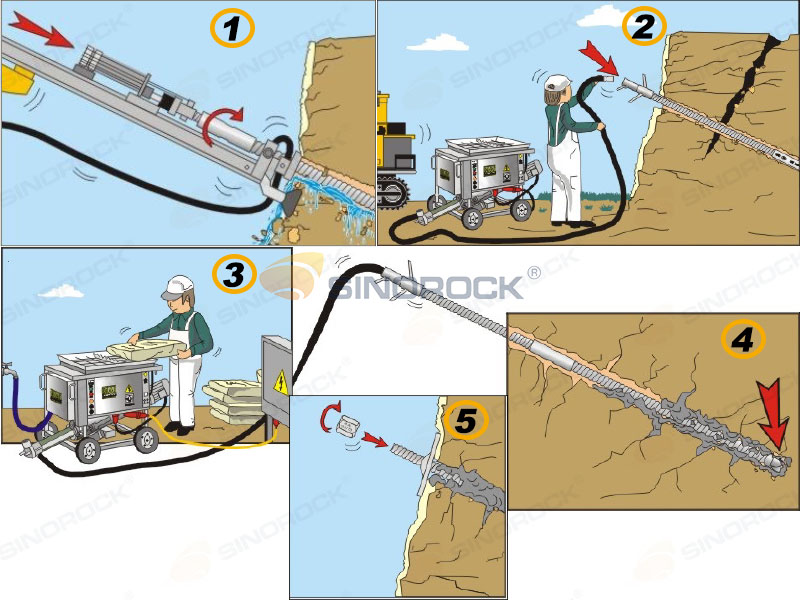
A typical installation sequence consists of:

Drilling

The SDA bar is connected to a suitable drill bit and advanced into the ground using rotary-percussion or rotary drilling.

Flushing

Air, water, foam, or grout can be introduced through the hollow center of the bar to remove drilling debris and maintain the borehole during installation.

Extension

When the required drilling depth exceeds the length of one bar, additional SDA bars can be connected using threaded couplers.

Grouting

Grout is introduced through the hollow bar. Depending on the ground conditions and installation method, drilling and grouting can also be carried out simultaneously.

Anchorage

After drilling and grouting are completed, the exposed end of the SDA bar is fitted with the required bearing plate and nut.

The resulting load-transfer mechanism can be represented as: Hollow Bar → Grout → Surrounding Ground

This simplified sequence illustrates the basic load-transfer path of an SDA system. The hollow bar carries the structural load, grout transfers the load from the steel to the surrounding ground, and the ground provides the ultimate resistance through the bonded zone.

SDA Installation Methods

SDA Installation Methods

The installation sequence explains the basic operation of an SDA bolt, but the actual drilling and grouting process can vary considerably depending on the ground conditions. Selecting an appropriate flushing and installation method is therefore an important part of SDA system performance.

Water Flushing

Water flushing is identified for dense sand, gravel formations, and rock conditions. Its functions include transporting larger drilling cuttings away from the borehole, cooling the drill bit, and supporting the drilling process

However, water should not automatically be selected for every ground condition. EN 14490 notes that, for self-drilled hollow-bar soil nails in unstable ground, the stabilizing fluid must be suitable for the ground, and that water should not be used where it increases instability or reduces bond capacity.

The choice of flushing medium should therefore be based on the actual ground conditions rather than treated as a standard selection for all SDA installations. Where water may adversely affect borehole stability or the grout-ground interface, alternative flushing methods may be more appropriate.

Air or Foam Flushing

Air and foam flushing can be used in softer ground conditions such as soft chalk and clay, particularly where excessive water discharge needs to be avoided.

In ground that is loose, unstable, or particularly sensitive to borehole collapse, flushing alone may not provide sufficient support to the drilled zone. In such situations, drilling and grouting can be combined to provide additional stabilization during installation.

Simultaneous Drilling and Grouting

In unstable formations, maintaining an open borehole can be one of the principal construction challenges. Loose sands, gravels, fractured formations, and weak ground may be susceptible to borehole collapse or loss of drilling fluid.

Among the available SDA installation methods, simultaneous drilling and grouting is particularly important when the stability of the drilled hole is a major construction concern. With simultaneous drilling and grouting, grout can be introduced during drilling, helping to stabilize the drilled zone and fill the space surrounding the installed anchor.

This method can:

  • Help stabilize the borehole during installation
  • Improve grout coverage along the anchor
  • Allow grout to penetrate surrounding ground
  • Improve the potential ground-to-anchor interface
  • Combine drilling and grouting into a single operation

EN 14490 likewise recognizes self-drilled hollow-bar soil nails and notes that simultaneous drilling and grouting can produce an enlarged grout body under some ground conditions. It also emphasizes that drilling rate, grout pressure, and flow rate should be adjusted to the ground conditions and design requirements.

Conclusion

A Self-Drilling Anchor (SDA) bolt is more than a hollow threaded steel bar with a drill bit. It is an integrated ground-engineering system that combines drilling, flushing, grouting, reinforcement, and load transfer within an installation process.

One of the key advantages of SDA technology is its adaptability to challenging ground conditions, particularly where conventional drilling and subsequent installation of reinforcement may be difficult. By allowing drilling and reinforcement to be integrated into a single system, SDA technology can provide a practical solution for soil nailing, slope stabilization, micropiles, tunneling, foundations, and other ground-engineering applications.

Soil nailing is a widely used ground reinforcement technique for stabilizing slopes, supporting excavations, and reinforcing unstable soil masses. However, not all soil nailing systems are installed or configured in the same way. Different types of soil nails can vary in installation method, reinforcement configuration, material, and corrosion protection, and these differences directly affect their construction process, performance, durability, and suitability for specific ground conditions.

Understanding the different types of soil nailing is therefore essential for selecting an appropriate system for each project. This guide explains the main types of soil nails, their installation methods, advantages, limitations, applications, and the key factors to consider when choosing a soil nailing system.

Types of Soil Nailing by Installation Method

The installation method is one of the most important ways to classify soil nails because it directly affects construction sequence, equipment requirements, installation speed, and suitability for different ground conditions.

Drilled and Grouted Soil Nails
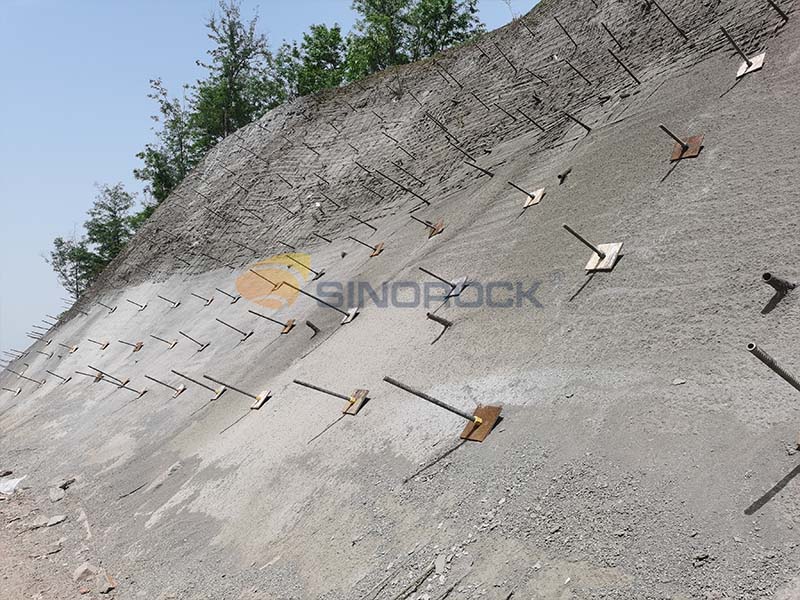
Drilled and Grouted Soil Nails

Drilled and grouted soil nails are a conventional and widely used soil nailing system. The method involves drilling a borehole to the required depth, inserting a reinforcing bar, and filling the annular space with cementitious grout.

The typical installation sequence is: Excavation → Drilling → Reinforcement Installation → Grouting → Facing

A solid steel bar is normally inserted into the drilled hole. Centralizers may be installed along the bar to maintain its position and provide adequate grout coverage. Cement grout is then introduced into the borehole to create a bond between the reinforcement and surrounding soil.

Different drilling techniques can be selected according to ground conditions, including rotary and rotary-percussive drilling.

Advantages of Drilled and Grouted Soil Nails

  • Well-established construction method
  • Suitable for a wide range of soil conditions
  • Reliable load transfer through the grout-soil interface
  • Allows the borehole diameter and alignment to be controlled during construction
  • Suitable for relatively long soil nails
  • Compatible with reinforced shotcrete and other facing systems

Limitations

The main limitation is borehole stability. In loose, collapsing, highly fractured, or water-bearing ground, the borehole may not remain open long enough for reinforcement installation and grouting.

Additional measures such as temporary casing or alternative drilling techniques may therefore be required.

Typical Applications

Drilled and grouted soil nails are commonly used for:

  • Highway and railway slope stabilization
  • Building excavation support
  • Foundation pits
  • Retaining structures
  • Bridge approaches and abutments
  • General soil stabilization projects

Self-Drilling Soil Nails
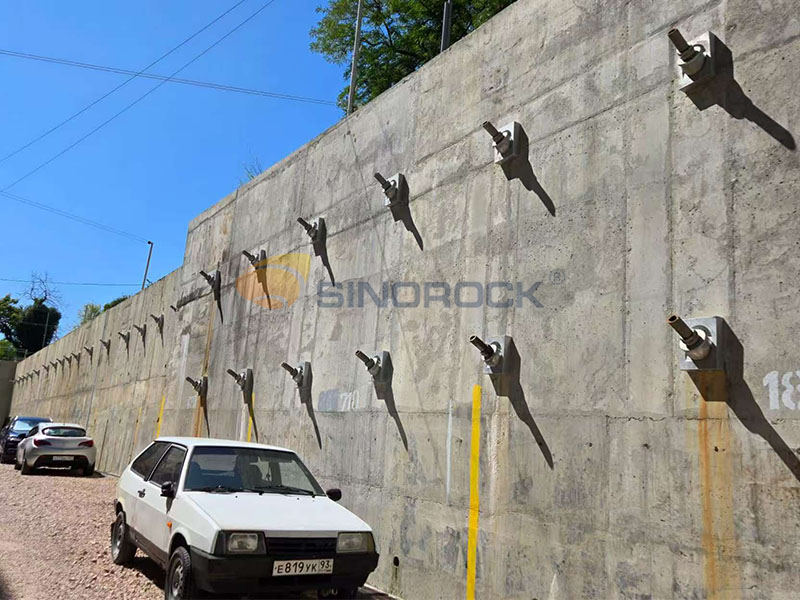
Types of Soil Nailing by Installation Method

Self-drilling soil nails use hollow steel bars that function as both the drilling element and permanent reinforcement.

A sacrificial drill bit is attached to the end of the hollow bar. During installation, the bar advances into the ground while grout can be injected through the hollow center of the bar and discharged through the drill bit.

This integrates drilling, reinforcement installation, and grouting into a single construction process. The basic principle can be summarized as: Drilling + Grouting + Reinforcement Installation

How Do Self-Drilling Soil Nails Work?

The hollow bar is connected to drilling equipment and fitted with a suitable drill bit for the ground conditions.

As the drilling operation progresses:

  • The drill bit penetrates the ground.
  • The hollow bar advances with the drill bit.
  • Grout is pumped through the internal bore of the bar.
  • Grout exits through the drill bit.
  • The surrounding ground is filled with grout.
  • The hollow bar remains in the ground as the permanent reinforcement.
  • A bearing plate and nut are installed at the nail head.

Because the reinforcement remains in the ground, there is no need to remove the drilling rod after installation.

Advantages of Self-Drilling Soil Nails

Self-drilling systems are particularly useful where conventional borehole installation is difficult.

Key advantages include:

  • Drilling and reinforcement installation are integrated
  • Grouting can be performed through the hollow bar
  • Reduced dependence on maintaining an open borehole
  • Suitable for loose and unstable ground
  • Good adaptability to difficult drilling conditions
  • Efficient installation sequence
  • Different drill bits can be selected for different ground formations
  • Typical Applications

Self-drilling soil nails are commonly considered for loose soils, collapsing soils, gravelly ground, mixed soil and rock, weathered formations, landslide stabilization, difficult-access sites, excavation support, and slope stabilization.

For unstable ground where a conventional drilled hole may collapse before reinforcement and grout can be installed, self-drilling soil nails can provide a practical alternative.

Driven Soil Nails
Driven Soil Nails

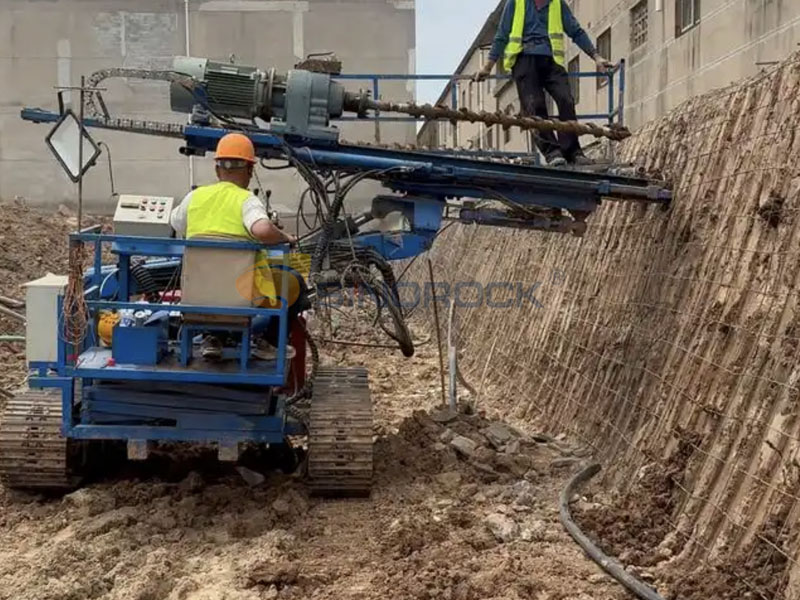
Driven soil nails are installed directly into the ground without first drilling a conventional borehole. Steel bars, rods, or other reinforcing elements are driven into the soil using suitable impact or vibratory equipment. The surrounding soil provides resistance around the installed reinforcement.

The general installation process is: Positioning → Driving → Bearing Plate Installation → Facing. Compared with drilled and grouted systems, driven nails can have a relatively simple installation sequence and can be installed rapidly when the ground is sufficiently penetrable.

Advantages

  • Fast installation
  • Simple construction sequence
  • Limited drilling spoil
  • No conventional grouting operation
  • Suitable for certain temporary stabilization projects

Limitations

Driven soil nails are strongly dependent on ground conditions. Dense or hard soils, large gravel, rock fragments, and underground obstructions can make installation difficult.

Corrosion protection also requires particular attention, especially when driven nails are considered for permanent applications.

Typical Applications

Driven soil nails may be considered for:

  • Temporary excavation support
  • Temporary slope stabilization
  • Emergency stabilization
  • Soft or relatively penetrable soils
  • Projects where rapid installation is required

Types of Soil Nails by Reinforcement Configuration

Another way to classify soil nails is according to the configuration of the reinforcing bar. The two main configurations are solid-bar and hollow-bar soil nails.

Solid-Bar Soil Nails
Solid-Bar Soil Nails

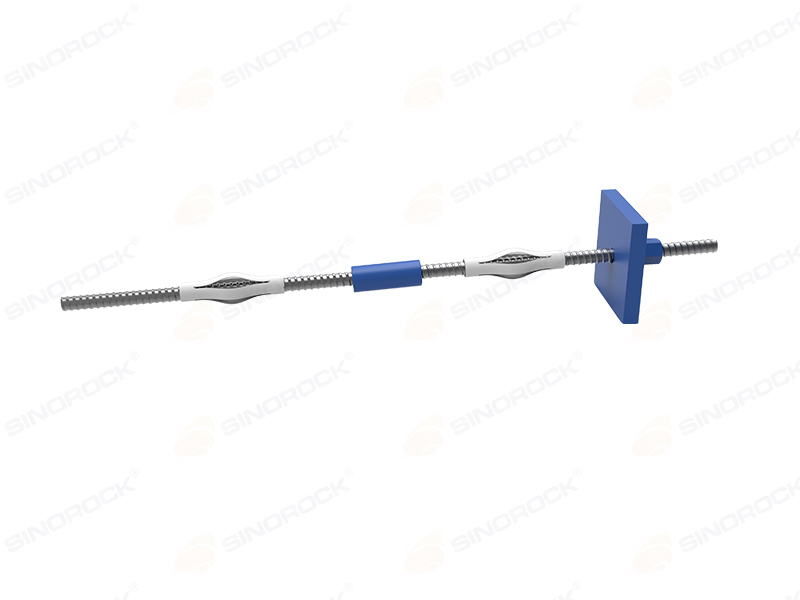
Solid-bar soil nails use conventional solid steel reinforcement. Solid-bar reinforcement is commonly used in conventional drilled and grouted soil nailing systems. The borehole is drilled first, followed by reinforcement installation and grouting.

A typical system consists of: Solid Steel Bar + Cement Grout + Bearing Plate + Nut

Advantages

  • Simple structural configuration
  • High tensile strength
  • Wide range of steel grades and diameters
  • Established installation and design practices
  • Suitable for many conventional soil nailing applications

Typical Applications

  • Slope stabilization
  • Excavation support
  • Highway and railway slopes
  • Retaining structures
  • General ground reinforcement

Hollow-Bar Soil Nails
Hollow-Bar Soil Nails

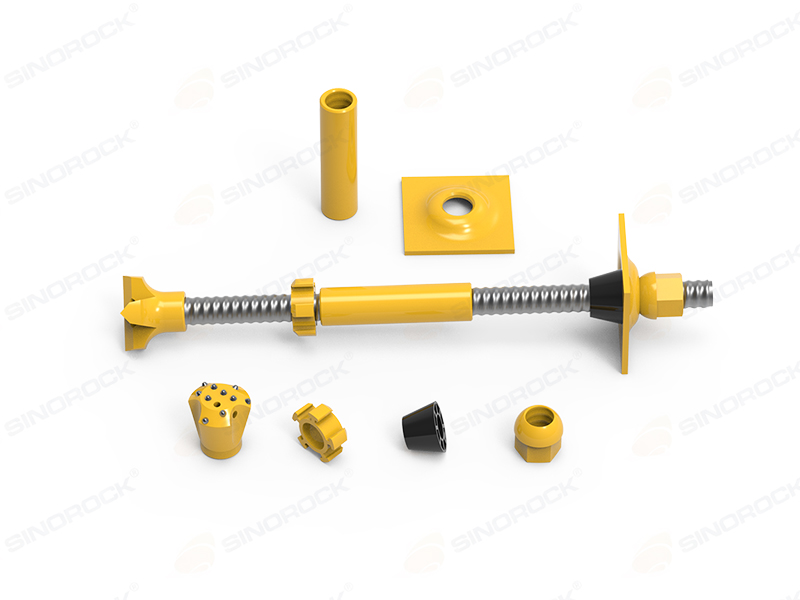
Hollow-bar soil nails use steel reinforcement with a continuous internal bore. The hollow section provides a channel through which grout can be delivered. In self-drilling systems, the hollow bar also serves as the drilling rod and remains in the ground as the permanent reinforcement.

A typical system may include:

  • Hollow steel bar
  • Drill bit
  • Coupler
  • Nut
  • Bearing plate
  • Centralizer
  • Cement grout

Advantages

  • Internal channel for grout delivery
  • Can integrate drilling and grouting
  • Suitable for difficult ground
  • Reduces dependence on an open borehole
  • Suitable for self-drilling applications

The terms hollow-bar soil nail and self-drilling soil nail describe different characteristics of a system. Hollow-bar primarily refers to the configuration of the reinforcement, while self-drilling refers to the installation method.

Therefore, a self-drilling soil nail commonly uses a hollow bar, but hollow-bar and self-drilling should not be treated as identical classification terms.

Types of Soil Nails by Material

The material used for the reinforcing element affects tensile strength, stiffness, weight, corrosion resistance, and handling requirements.

Steel Soil Nails
Steel Soil Nails

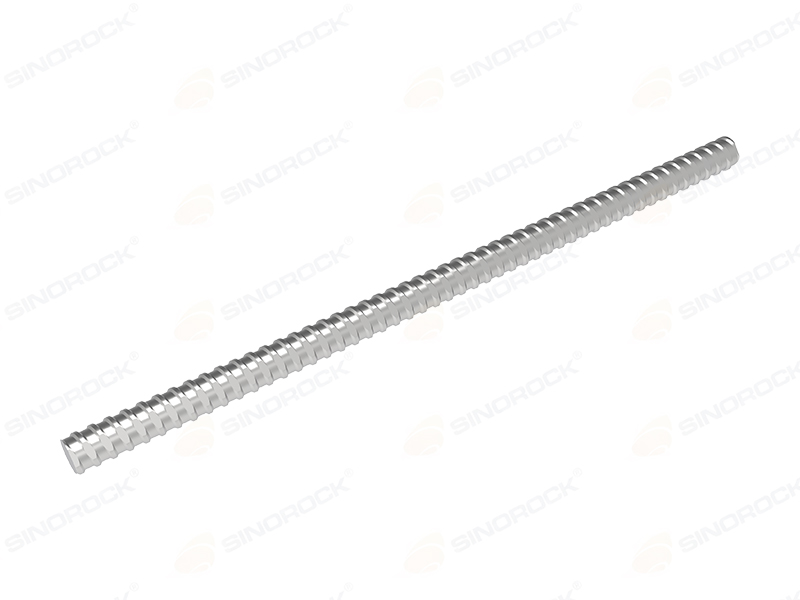
Steel is the most widely used material for soil nail reinforcement. Common steel soil nail components include threaded steel bars, couplers, nuts, bearing plates, and centralizers.

Steel nails can be used in both temporary and permanent applications, provided that the selected reinforcement and corrosion protection system meet the project requirements.

Steel soil nails provide:

  • High tensile strength
  • High stiffness
  • Reliable mechanical performance
  • A wide range of sizes and grades
  • Compatibility with threaded connections and accessories

For applications requiring enhanced durability, steel reinforcement can be combined with additional corrosion protection such as galvanizing, epoxy coating, or other protective systems.

Fiber-Reinforced Polymer Soil Nails
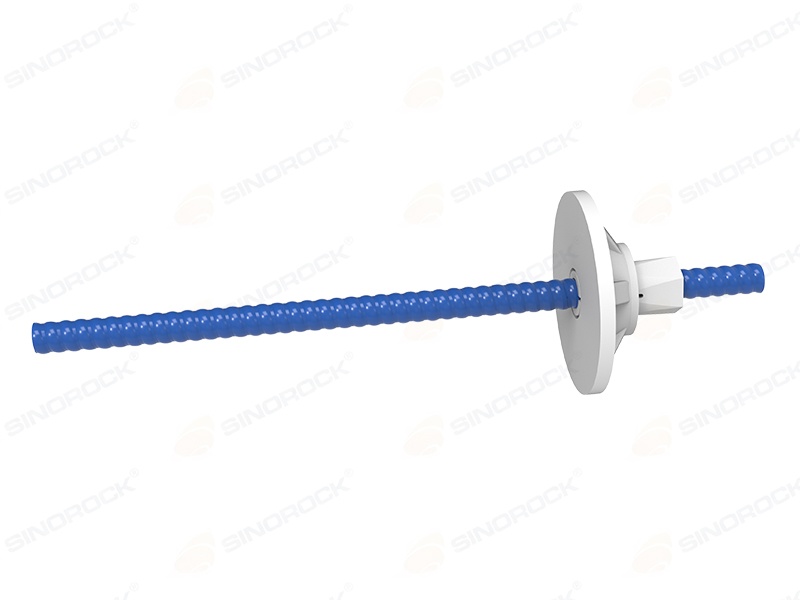
Fiber-Reinforced Polymer Soil Nails

Fiber-Reinforced Polymer (FRP) reinforcement can also be used in selected soil nailing applications. A common FRP material is GFRP — Glass Fiber-Reinforced Polymer.

Advantages of FRP Soil Nails

FRP reinforcement can provide:

  • High corrosion resistance
  • Low weight
  • Favorable strength-to-weight ratio
  • Easier handling
  • Suitability for selected chemically aggressive environments

FRP and steel have different mechanical properties and stiffness characteristics. Their connection systems and load-transfer behavior also differ.

Therefore, FRP soil nails should be designed according to their specific material properties and the requirements of the project rather than being considered a direct replacement for steel reinforcement in every application.

Types of Soil Nails by Corrosion Protection

Corrosion protection is an important consideration for soil nails, particularly when reinforcement is intended for permanent structures or aggressive ground conditions.

The protection system should be selected according to the required service life, soil and groundwater conditions, environmental exposure, and applicable design standards.

Cement-Grouted Soil Nails
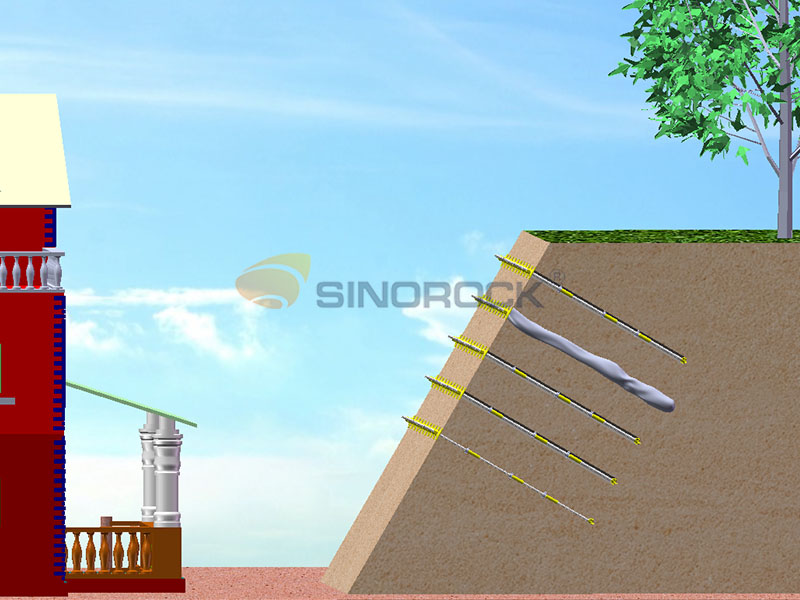
Cement-Grouted Soil Nails

Cement grout provides an important layer of protection around steel reinforcement. When the steel bar is properly surrounded by grout, the grout helps isolate the steel from the surrounding environment and provides an alkaline environment around the reinforcement.

The effectiveness of grout-based corrosion protection depends on factors such as:

  • Grout quality
  • Grout coverage
  • Cracking
  • Groundwater conditions
  • Soil chemistry
  • Required service life
  • Construction quality

Galvanized Soil Nails
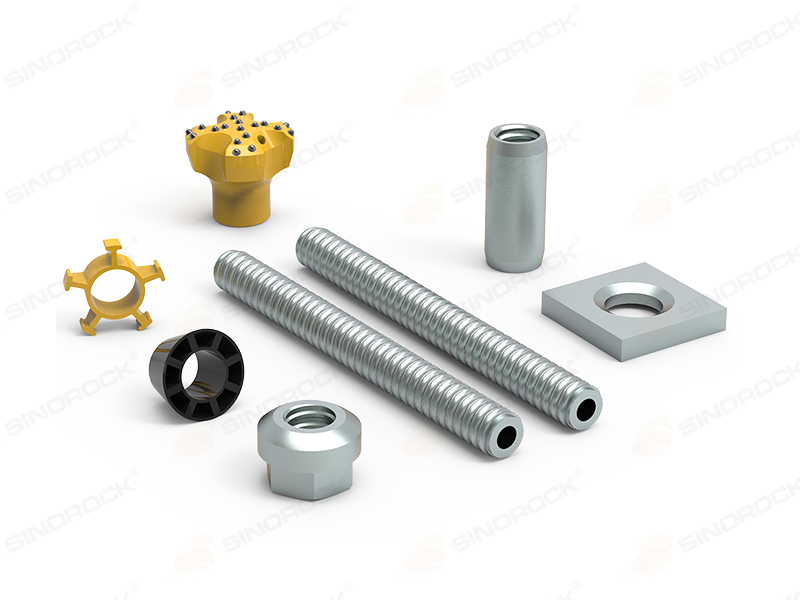
Galvanized Soil Nails

Galvanized soil nails have a zinc coating applied to the steel surface to provide additional corrosion protection. Galvanizing creates a protective layer between the steel and the surrounding environment and can be considered when increased corrosion resistance is required.

For permanent applications, galvanization may be combined with grout or other protective measures depending on the project requirements.

Epoxy-Coated Soil Nails
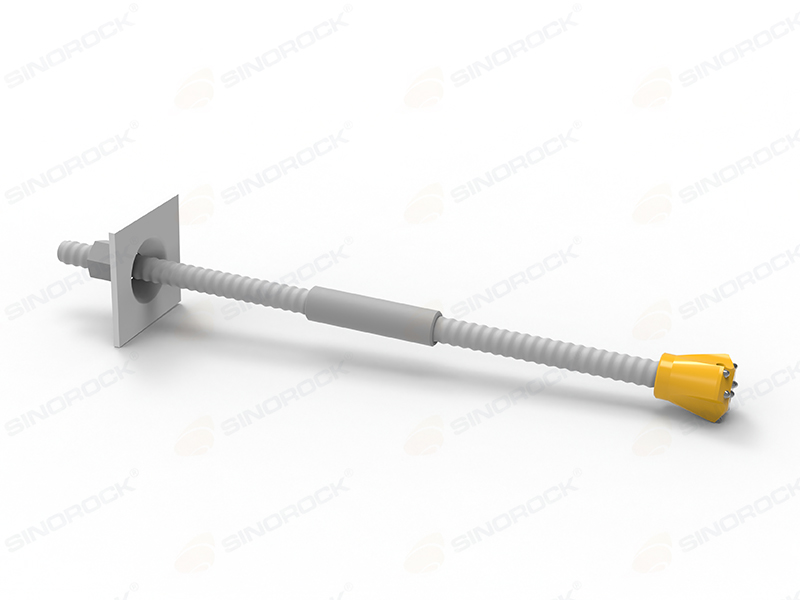
Epoxy-Coated Soil Nails

Epoxy-coated soil nails use a protective polymer coating as a barrier between the steel reinforcement and the surrounding environment. The coating can improve corrosion resistance by reducing direct exposure of the steel to moisture and aggressive substances.

The effectiveness of an epoxy protection system depends on coating quality and maintaining coating integrity during manufacturing, handling, transportation, and installation.

Sheathed Soil Nails
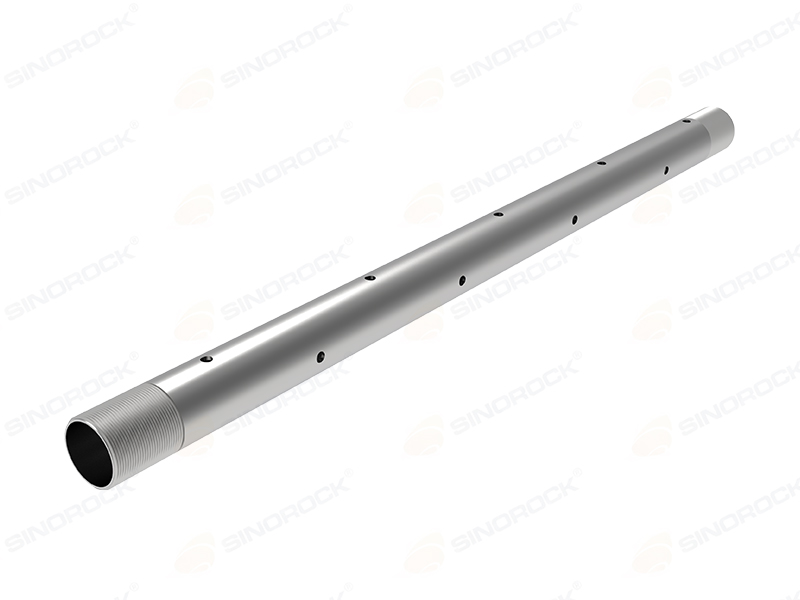
Sheathed Soil Nails

Sheathed soil nails incorporate a protective sheath around the reinforcement. The sheath provides a physical barrier between the steel and surrounding soil or groundwater. Sheathing can form part of a dedicated corrosion protection system for applications where enhanced durability is required.

Duplex and Combined Corrosion Protection
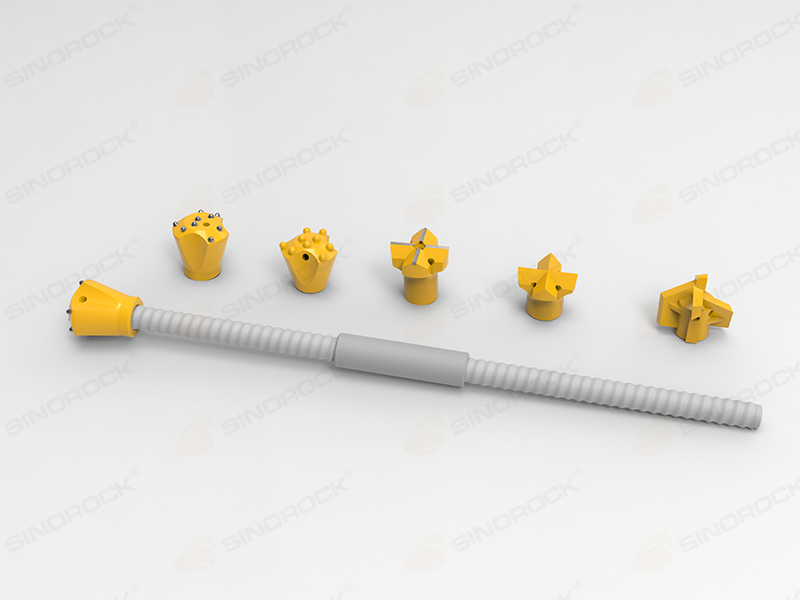
Duplex and Combined Corrosion Protection

For demanding permanent applications, multiple corrosion protection measures can be combined. One example is Galvanizing + Epoxy Coating.

Additional protection may also involve the combination of coatings, sheathing, and cement grout. The objective is to provide multiple protective barriers and improve the durability of the reinforcement over the required design life.

The appropriate corrosion protection system should be determined according to the environmental exposure and project-specific requirements.

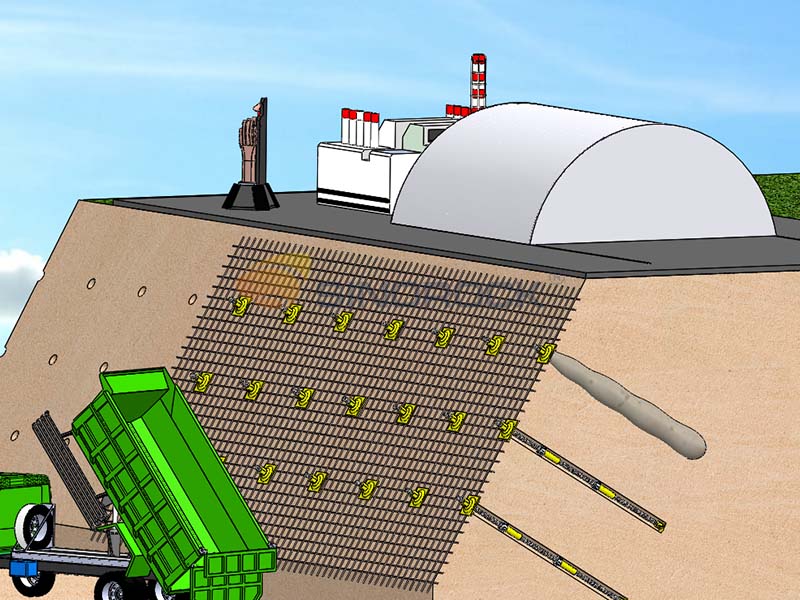
How to Choose the Right Type of Soil Nail?
How to Choose the Right Type of Soil Nail

Selecting the appropriate soil nail requires consideration of more than one factor. Ground conditions, construction method, reinforcement requirements, corrosion risk, and project duration should all be evaluated.

Ground Conditions

Ground conditions are one of the most important factors in soil nail selection.

  • Stable Soil: Where the drilled hole can remain stable during construction, drilled and grouted soil nails can provide a conventional and reliable solution.
  • Loose or Collapsing Soil: Where maintaining an open borehole is difficult, self-drilling soil nails can provide greater construction adaptability because drilling and grouting can be integrated.
  • Soft and Penetrable Soil: Driven soil nails may be considered where the ground can be penetrated effectively using the available equipment.

Construction Access

Site conditions can influence the choice of installation method. Projects may have limited working space, steep slopes, restricted drilling height, existing structures, or difficult equipment access. In such conditions, the equipment size, drilling method, reinforcement handling, and installation sequence should all be considered. Self-drilling systems can be particularly useful where a simplified installation process is beneficial.

Structural Requirements

The selected soil nail should satisfy the structural and geotechnical requirements of the project. Important parameters include nail tensile capacity, pullout resistance, nail length, bar diameter, nail spacing, nail inclination, grout-soil bond strength, and facing capacity.

These parameters should be determined through project-specific geotechnical design and verified through appropriate testing where required.

Project Duration and Corrosion Risk

The required service life affects corrosion protection requirements. Temporary works may have different protection requirements from permanent structures. Permanent soil nailing systems may require additional corrosion protection depending on the aggressiveness of the surrounding soil and groundwater.

Potential protection measures include cement grout, galvanizing, epoxy coating, protective sheathing, combined protection systems, and corrosion-resistant FRP reinforcement.

Soil Nailing Applications

Different soil nailing systems can be applied to a wide range of geotechnical projects.

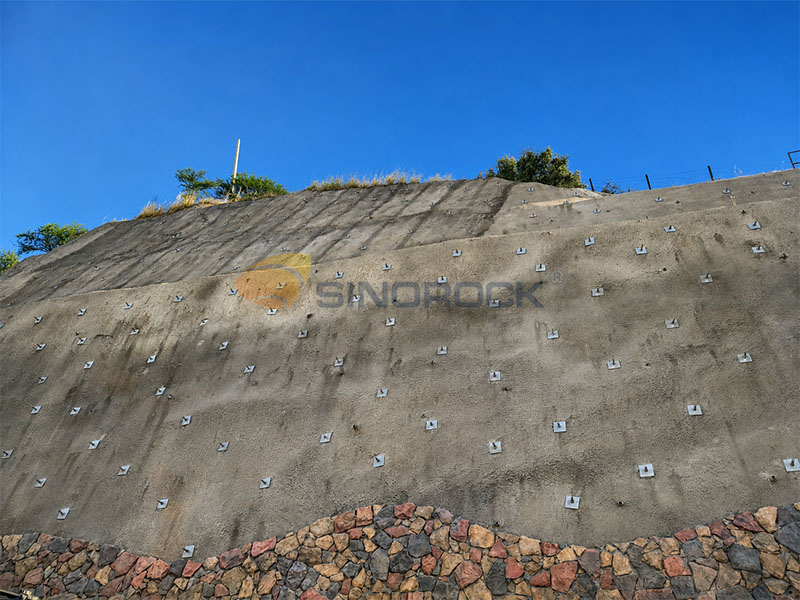
Slope Stabilization
Slope Stabilization soil nail

Soil nails reinforce the soil mass and increase resistance to slope movement. They are widely used for highway, railway, infrastructure, and natural slope stabilization.

Foundation Support
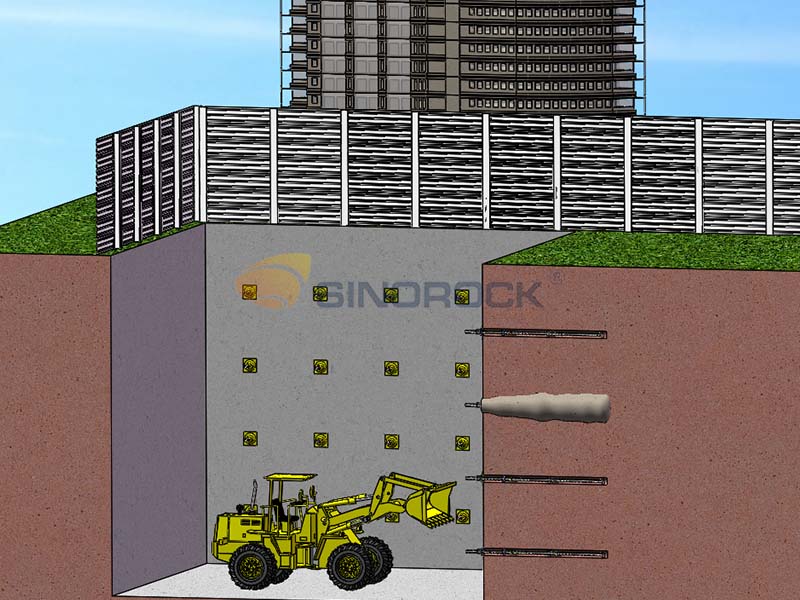
Foundation Support

Soil nailing can provide flexible support for foundation pits and other excavations, particularly where space for conventional retaining structures is limited.

Landslide Stabilization
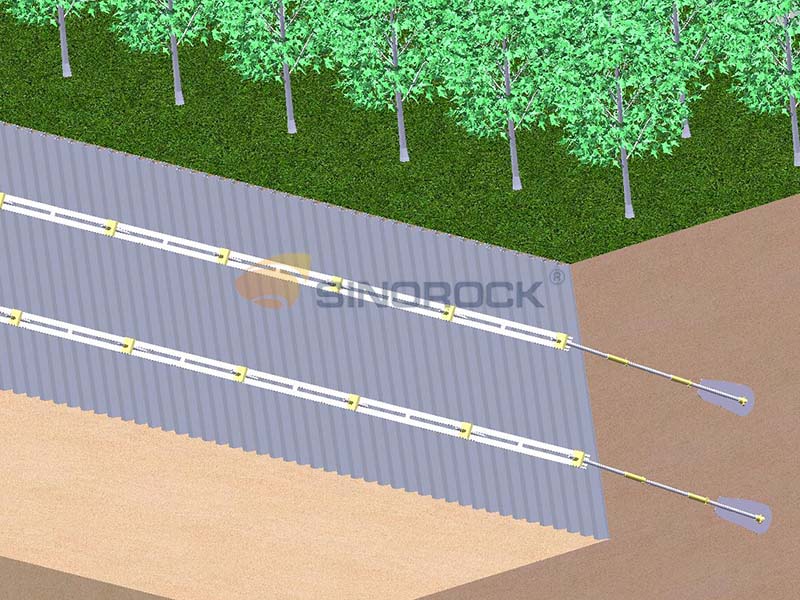
Landslide Stabilization

Self-drilling soil nails can be useful in unstable or collapsing ground where maintaining an open drilled hole is difficult.

Retaining Structures
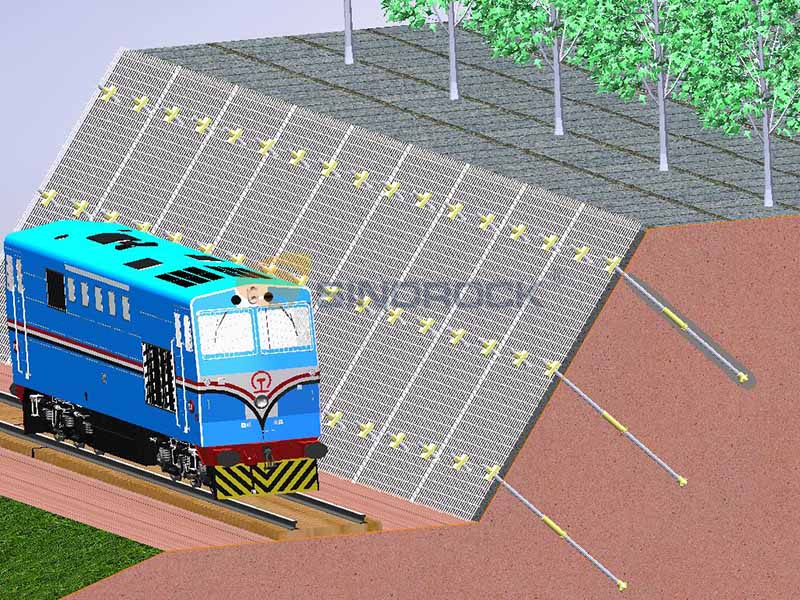
Retaining Structures

Soil nails can be combined with reinforced shotcrete and drainage systems to form a flexible retaining structure.

Tunnel Portals and Cut Slopes
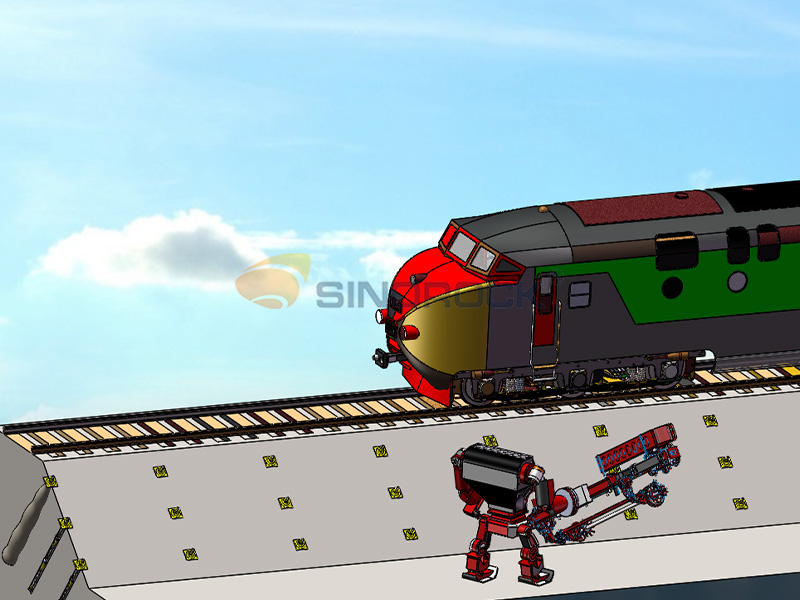
Tunnel Portals and Cut Slopes

Soil nailing can also be used to reinforce slopes and excavated surfaces around tunnel portals and other transition zones between soil and rock.

Conclusion

Understanding the types of soil nailing requires more than simply listing different soil nail products. The appropriate soil nail type depends on the specific project conditions, including soil and groundwater conditions, required structural performance, construction access, installation requirements, corrosion exposure, and design service life.

Among these systems, self-drilling hollow-bar soil nails are particularly suitable for loose, unstable, and difficult ground where maintaining an open borehole can be challenging. By integrating drilling, reinforcement installation, and grouting into one construction process, they can provide an efficient and adaptable solution for slope stabilization and excavation support.

Sinorock FAQs

FAQs of Sinorock background

Find answers about Sinorock products, applications, and technical solutions.

Request a Quote from SINOROCK

Submit your requirements and our team will get back to you within 24 hours.

Contact Form
Your information is safe with us and will not be shared.
Scroll to Top

Get A Quote Now !

Contact Form
Your information is safe with us and will not be shared.
Need a quote or more information? We're here to help!
popup team