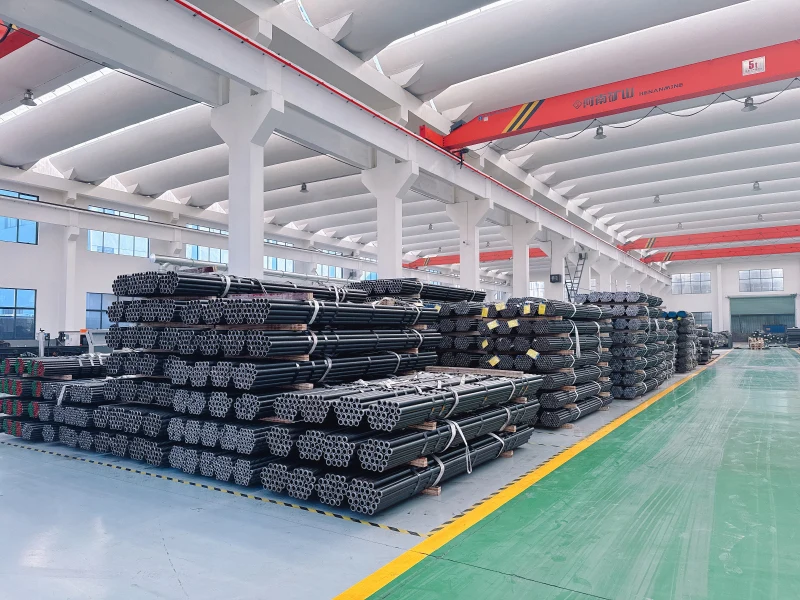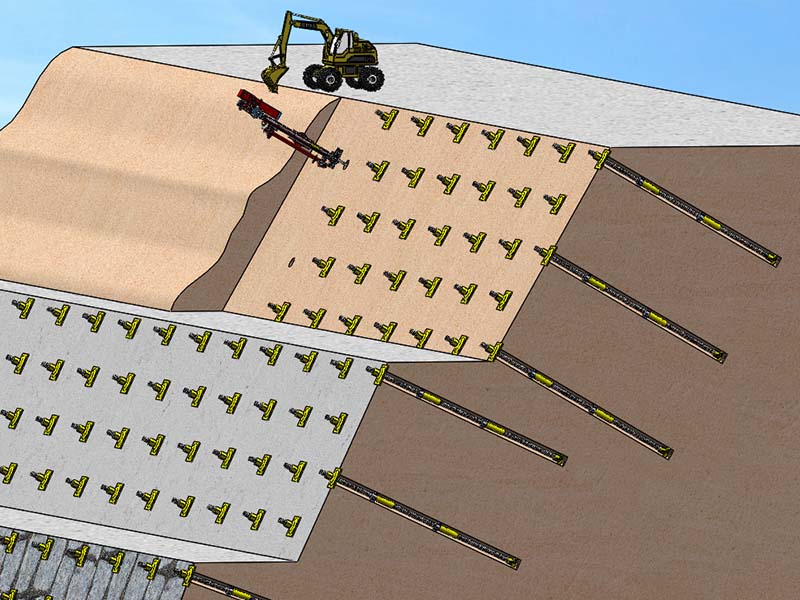
An SDA bolt integrates drilling, reinforcement, and grouting into a single system. Instead of drilling a borehole first and installing a separate reinforcing element afterward, the hollow threaded anchor bar itself functions as the drill string during installation and remains in the ground as the permanent reinforcement element.
This integrated approach can simplify installation, reduce the number of separate operations, and provide greater adaptability to challenging ground conditions. However, understanding how an SDA system works requires more than simply knowing what the abbreviation stands for. The bar, drill bit, coupler, anchorage components, flushing method, grout, and surrounding ground all contribute to the performance of the completed system.
This guide explains what an SDA bolt is, how it works, its main components and types, common installation methods, and why simultaneous drilling and grouting can be important in difficult ground conditions.
What Does SDA Stand For?
SDA stands for Self-Drilling Anchor.
An SDA bolt is generally based on a hollow threaded steel bar. A compatible sacrificial drill bit is attached to the leading end of the bar, allowing the bar to function as the drill string during installation.
The hollow center has two important functions:
- Flushing during drilling — air, water, foam, or grout can be introduced through the hollow bar depending on the installation method and ground conditions.
- Grouting — cementitious grout can subsequently be injected through the bar to fill the annular space and form the bond between the steel reinforcement and surrounding ground.
Understanding what “SDA” stands for provides the basic definition, but it does not fully explain how the system differs from conventional anchors. To understand its engineering characteristics, it is useful to look more closely at what an SDA bolt actually is and how its hollow-bar design functions during installation.
What Is an SDA Bolt?
A Self-Drilling Anchor (SDA) Bolt is a hollow, continuously threaded steel anchor designed to perform drilling, reinforcement, and grouting as an integrated installation system. Unlike conventional anchoring methods, where a borehole may be drilled first and reinforcement installed afterward, an SDA bolt is installed together with a sacrificial drill bit and can remain in the ground as the permanent reinforcing element.
The hollow bar provides a passage for flushing media during drilling and for grout during installation. Once installed and grouted, the steel bar, grout, and surrounding ground work together to form a ground-reinforcement system.
The concept is particularly relevant where borehole stability, difficult ground conditions, restricted access, or the need to integrate drilling and grouting into fewer operations are important considerations.
An SDA bolt is therefore not simply a hollow steel bar with a drill bit. It is a complete anchoring system in which multiple components work together during drilling, grouting, and load transfer. Each component has a specific role in the installation and performance of the finished anchor.
SDA Bolt Components
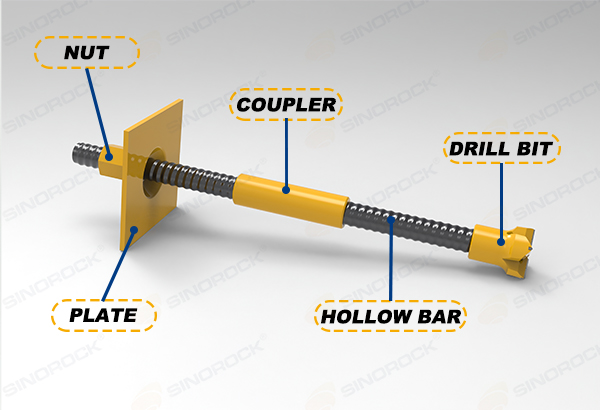
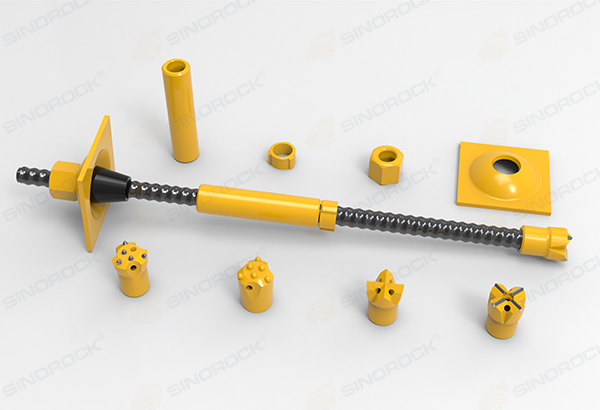
The performance of an SDA system depends on the compatibility of its individual components. Although the hollow anchor bar is the primary structural element, the drill bit, coupler, bearing plate, nut, and centraliser all contribute to installation efficiency, load transfer, and grout coverage.
Hollow Anchor Bar
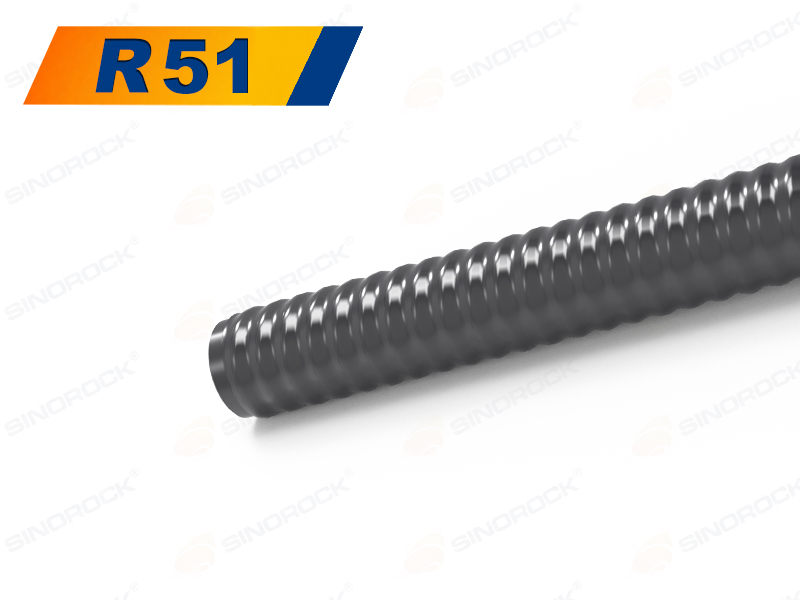
The hollow anchor bar is the primary structural component of an SDA system. It combines a continuous external thread, a hollow internal passage, a structural steel section, and connection capability
The continuous thread allows the bar to be cut or extended according to project requirements while maintaining compatibility with couplers and anchorage components.
While the hollow anchor bar provides the structural backbone of the system, it cannot perform the drilling operation by itself. A compatible drill bit is required to penetrate the ground and create the drilled hole.
Drill Bit
The drill bit is attached to the end of the SDA bar and performs the drilling operation.
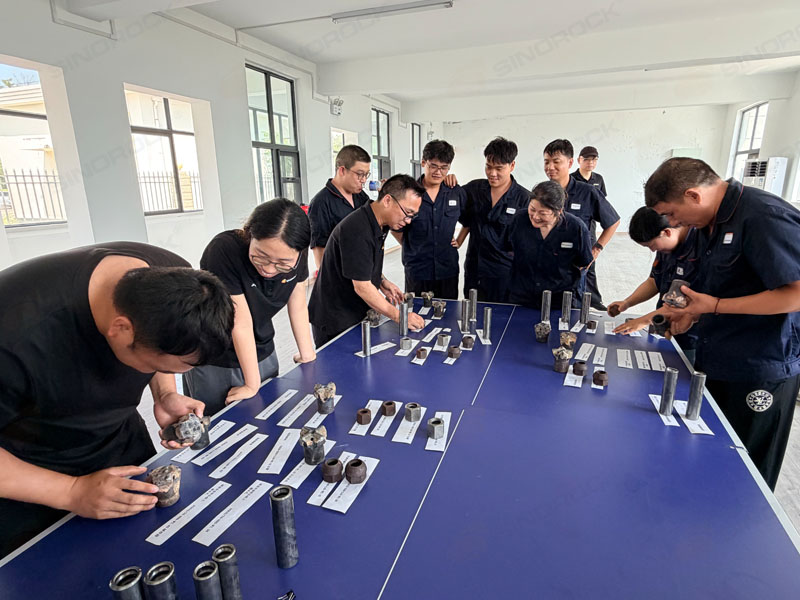
Different drill-bit configurations can be selected according to the geological formation. The available designs include various cross, three-blade, button, concave, and clay-bit configurations.
The drill bit is generally selected based on factors such as:
- Soil or rock formation
- Ground hardness
- Presence of gravel
- Fractured rock
- Drilling method
- Required borehole diameter
- Flushing method
For many SDA applications, the drill bit is sacrificial and remains underground together with the anchor bar.
Because SDA bars can be installed to considerable depths, multiple bar sections may be required during drilling. Extension couplers provide the mechanical connection needed to continue the drilling operation without replacing the installed bar with a separate reinforcement element.
Extension Coupler
Extension couplers connect individual SDA bars together. They allow the system to achieve the required anchor or pile length without requiring a single bar manufactured to the full installation depth.
The coupler must be compatible with the corresponding SDA thread and designed to maintain the required mechanical connection.
Once the required anchor length has been achieved and the bar has been grouted, the load must be transferred from the steel reinforcement to the surrounding structure or facing. This is the role of the anchorage components.
Bearing Plate and Nut
The bearing plate distributes the load from the anchor head to the surrounding structure or facing system.
The nut secures the SDA bar against the bearing plate and completes the anchorage assembly.
These components are particularly important in soil and rock nailing, slope stabilization, and other applications where the anchor head must transfer forces to a facing or structural element.
In addition to the anchorage components, maintaining an appropriate position of the bar within the drilled hole can influence grout coverage and the resulting steel-to-grout interface. A centraliser can therefore be used where required by the system or installation design.
Centraliser
A centraliser helps maintain the position of the SDA bar within the drilled hole and supports more consistent grout coverage around the bar.
With the main SDA components identified, the next consideration is the selection of the anchor bar itself. SDA systems are available in different diameters, thread configurations, and steel grades, allowing the system to be selected according to the required mechanical and installation performance.
SDA Anchor Bar Types and Mechanical Properties
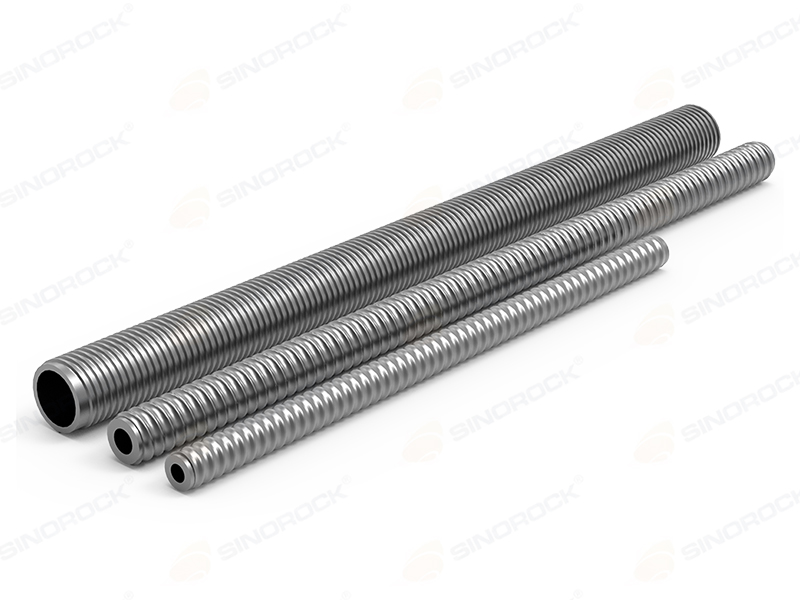
SDA bars are not manufactured as a single universal configuration. Different bar sizes, thread profiles, and steel grades are available to accommodate different structural loads, drilling conditions, and project requirements. Among the commonly used configurations are R-type and T-type SDA bars.
R-Type SDA Bars
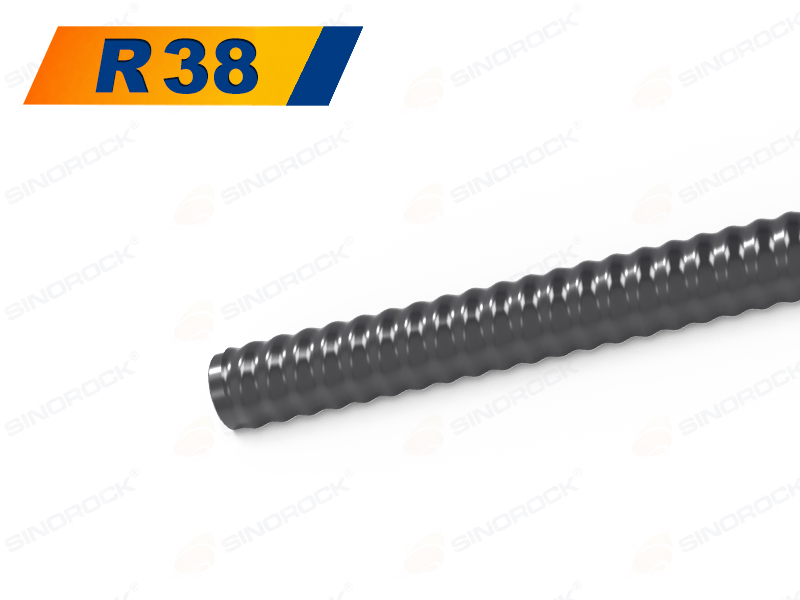
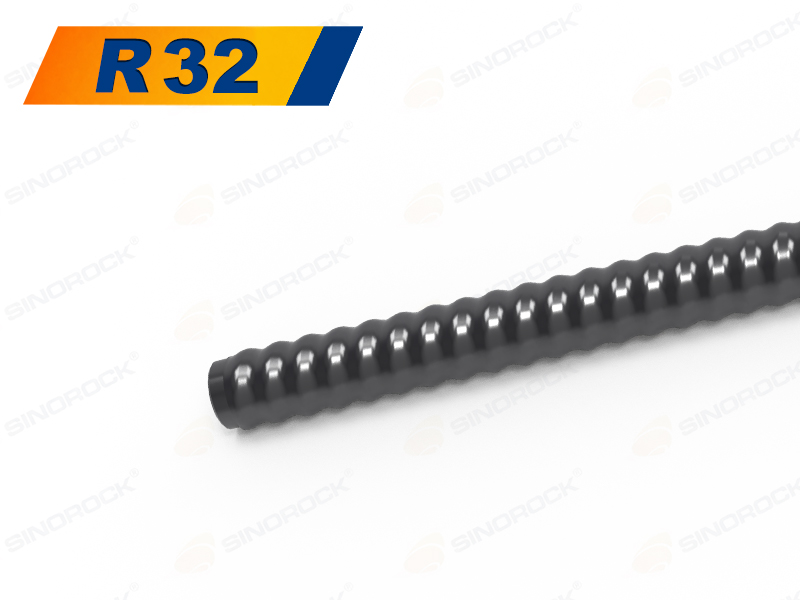
Typical R-thread SDA sizes shown for ground-engineering applications include:
| SDA Type | Ultimate Load | Yield Load |
| R32L | 210 kN | 160 kN |
| R32N | 280 kN | 230 kN |
| R32S | 360 kN | 280 kN |
| R38N | 500 kN | 400 kN |
| R51L | 550 kN | 450 kN |
| R51N | 800 kN | 630 kN |
R-type bars represent one commonly used configuration, while T-type systems provide another thread geometry and mechanical configuration. The appropriate selection depends on the requirements of the specific application rather than on thread type alone.
T-Type SDA Bars
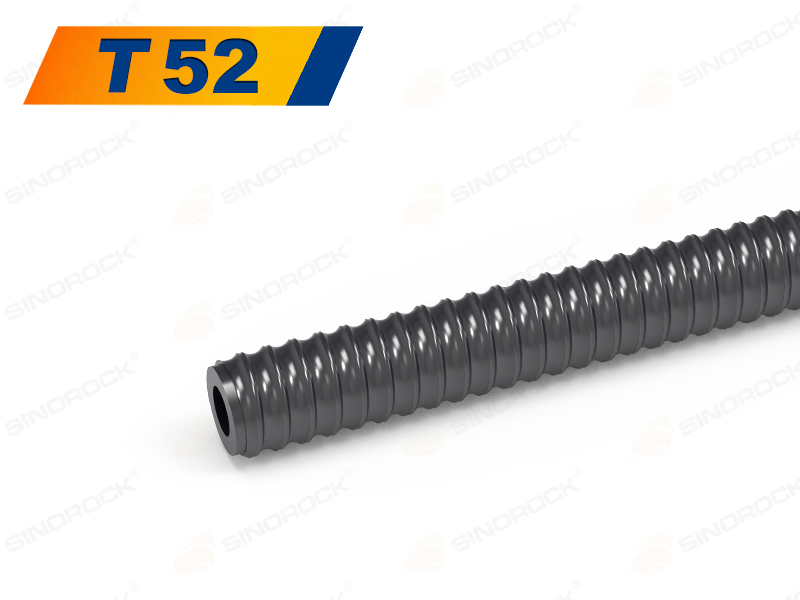
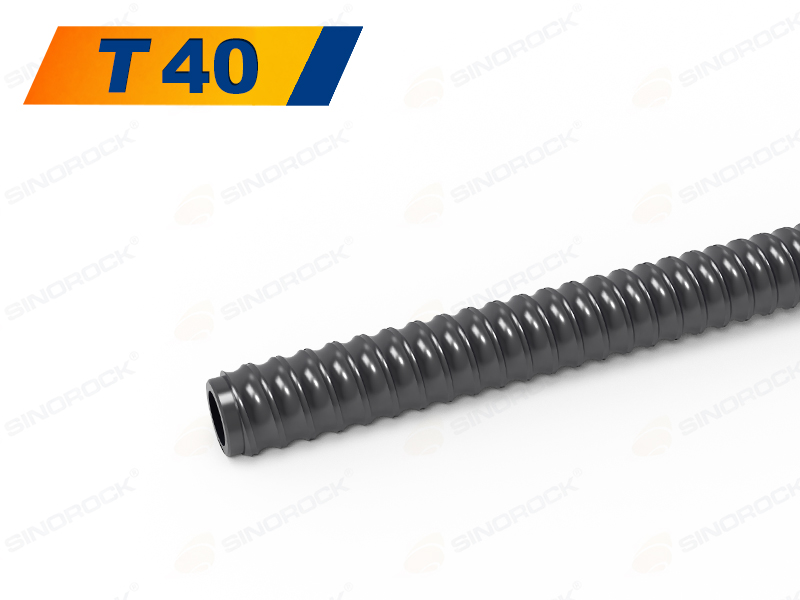
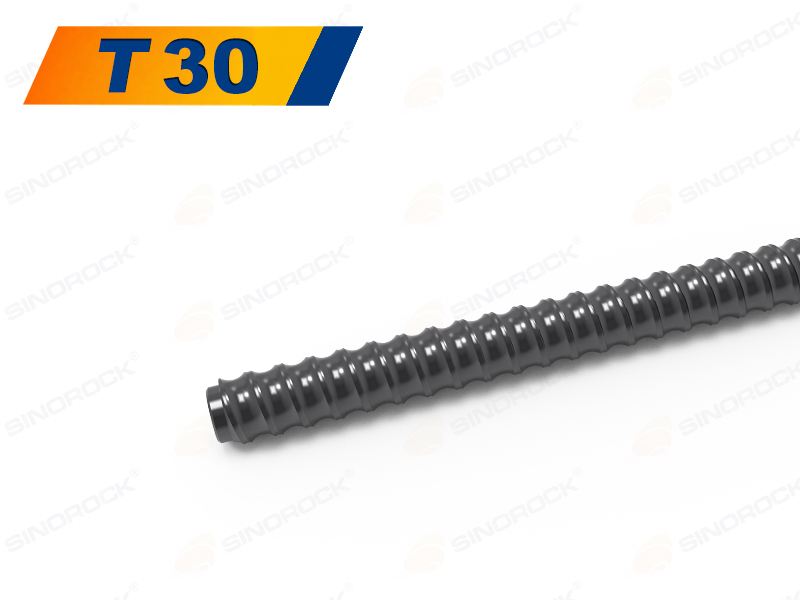
The same technical range also includes T-thread systems, such as T30. T40 and T52 configurations, with different load capacities.
| SDA Type | Ultimate Load | Yield Load |
| T30/16 | 220 kN | 180 kN |
| T30/14 | 260 kN | 220 kN |
| T30/11 | 320 kN | 260 kN |
| T40/20 | 540 kN | 430 kN |
| T40/16 | 660 kN | 525 kN |
| T52/26 | 929 kN | 730 kN |
Mechanical properties define the capacity of the steel component, but the performance of an SDA system depends on more than the bar itself. Installation conditions, drilling parameters, grout quality, bond with the surrounding ground, and the final load-transfer mechanism all influence the behavior of the completed system.
To understand this interaction, it is useful to look at how an SDA bolt is installed and how the individual components work together from drilling through to anchorage.
How Does an SDA Bolt Work?
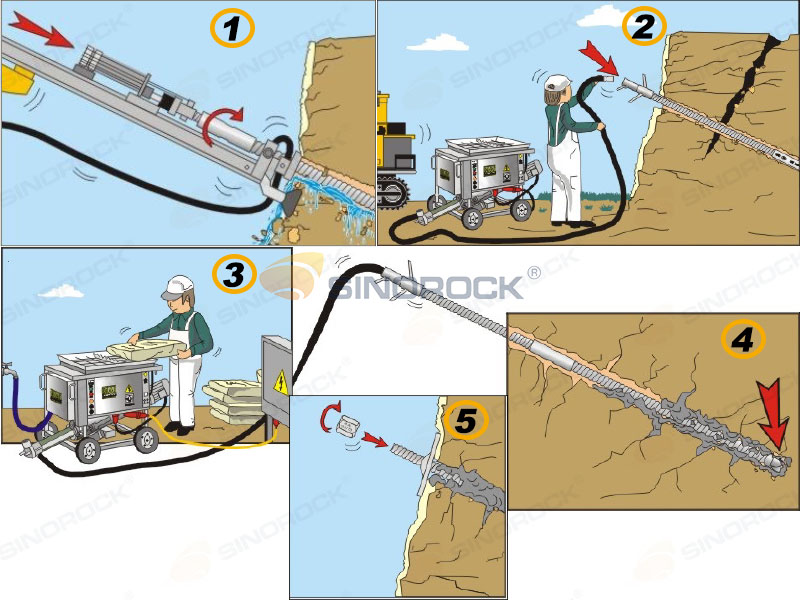
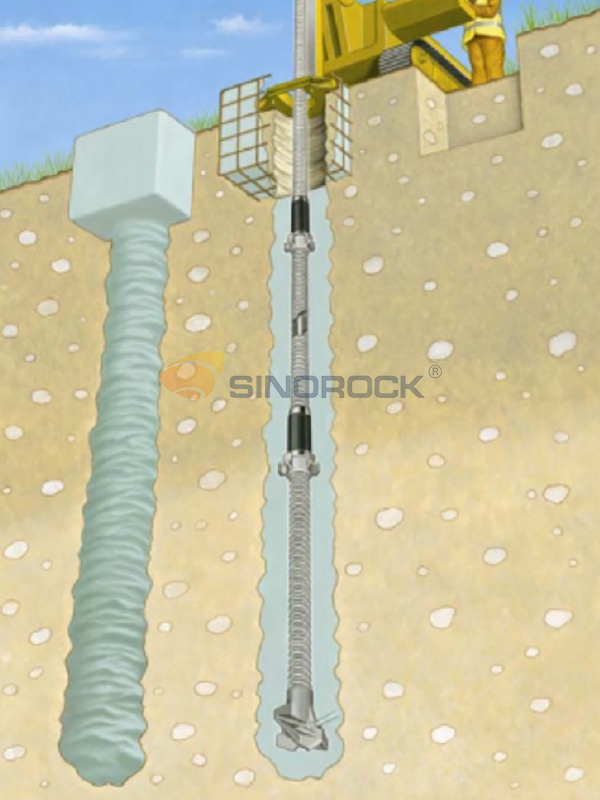
The fundamental principle of an SDA bolt is that the same hollow steel bar performs two functions during installation: it acts as the drill string during drilling and becomes the permanent reinforcement after installation.
A typical installation sequence consists of:
Drilling
The SDA bar is connected to a suitable drill bit and advanced into the ground using rotary-percussion or rotary drilling.
Flushing
Air, water, foam, or grout can be introduced through the hollow center of the bar to remove drilling debris and maintain the borehole during installation.
Extension
When the required drilling depth exceeds the length of one bar, additional SDA bars can be connected using threaded couplers.
Grouting
Grout is introduced through the hollow bar. Depending on the ground conditions and installation method, drilling and grouting can also be carried out simultaneously.
Anchorage
After drilling and grouting are completed, the exposed end of the SDA bar is fitted with the required bearing plate and nut.
The resulting load-transfer mechanism can be represented as: Hollow Bar → Grout → Surrounding Ground
This simplified sequence illustrates the basic load-transfer path of an SDA system. The hollow bar carries the structural load, grout transfers the load from the steel to the surrounding ground, and the ground provides the ultimate resistance through the bonded zone.
SDA Installation Methods
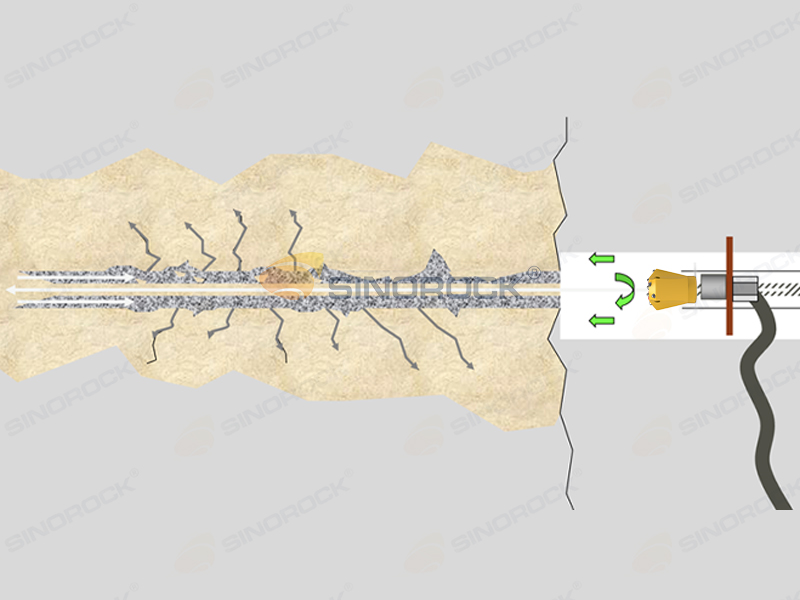
The installation sequence explains the basic operation of an SDA bolt, but the actual drilling and grouting process can vary considerably depending on the ground conditions. Selecting an appropriate flushing and installation method is therefore an important part of SDA system performance.
Water Flushing
Water flushing is identified for dense sand, gravel formations, and rock conditions. Its functions include transporting larger drilling cuttings away from the borehole, cooling the drill bit, and supporting the drilling process
However, water should not automatically be selected for every ground condition. EN 14490 notes that, for self-drilled hollow-bar soil nails in unstable ground, the stabilizing fluid must be suitable for the ground, and that water should not be used where it increases instability or reduces bond capacity.
The choice of flushing medium should therefore be based on the actual ground conditions rather than treated as a standard selection for all SDA installations. Where water may adversely affect borehole stability or the grout-ground interface, alternative flushing methods may be more appropriate.
Air or Foam Flushing
Air and foam flushing can be used in softer ground conditions such as soft chalk and clay, particularly where excessive water discharge needs to be avoided.
In ground that is loose, unstable, or particularly sensitive to borehole collapse, flushing alone may not provide sufficient support to the drilled zone. In such situations, drilling and grouting can be combined to provide additional stabilization during installation.
Simultaneous Drilling and Grouting
In unstable formations, maintaining an open borehole can be one of the principal construction challenges. Loose sands, gravels, fractured formations, and weak ground may be susceptible to borehole collapse or loss of drilling fluid.
Among the available SDA installation methods, simultaneous drilling and grouting is particularly important when the stability of the drilled hole is a major construction concern. With simultaneous drilling and grouting, grout can be introduced during drilling, helping to stabilize the drilled zone and fill the space surrounding the installed anchor.
This method can:
- Help stabilize the borehole during installation
- Improve grout coverage along the anchor
- Allow grout to penetrate surrounding ground
- Improve the potential ground-to-anchor interface
- Combine drilling and grouting into a single operation
EN 14490 likewise recognizes self-drilled hollow-bar soil nails and notes that simultaneous drilling and grouting can produce an enlarged grout body under some ground conditions. It also emphasizes that drilling rate, grout pressure, and flow rate should be adjusted to the ground conditions and design requirements.
Conclusion
A Self-Drilling Anchor (SDA) bolt is more than a hollow threaded steel bar with a drill bit. It is an integrated ground-engineering system that combines drilling, flushing, grouting, reinforcement, and load transfer within an installation process.
One of the key advantages of SDA technology is its adaptability to challenging ground conditions, particularly where conventional drilling and subsequent installation of reinforcement may be difficult. By allowing drilling and reinforcement to be integrated into a single system, SDA technology can provide a practical solution for soil nailing, slope stabilization, micropiles, tunneling, foundations, and other ground-engineering applications.