What Is a Combination Rock Bolt?
A combination rock bolt is a mechanically anchored, post-grouted rock reinforcement system designed to provide both immediate mechanical support and long-term reinforcement. It combines the advantages of mechanical end anchorage and full-length grouting, making it suitable for underground and geotechnical engineering projects where reliable load transfer, structural stability, and long-term durability are essential.
Unlike conventional mechanical rock bolts, which rely primarily on an expansion mechanism at the bolt head, a combination rock bolt incorporates an additional grouting system to improve the anchorage performance and provide enhanced protection against corrosion.
Its working principle involves two complementary anchoring mechanisms:
- Mechanical anchorage: An expansion shell at the embedded end of the bolt expands against the borehole wall, establishing an initial anchorage point and allowing the bolt to be tensioned.
- Grouted anchorage: Cementitious grout is subsequently injected through the grouting assembly, filling the surrounding spaces and forming a more comprehensive reinforcement system after curing.
By integrating these two mechanisms, the combination rock bolt provides an effective solution for projects requiring immediate support during construction and durable reinforcement throughout the service life of the structure.
The system is particularly suitable for underground tunnels, mining excavations, rock slopes, underground caverns, and infrastructure foundations exposed to demanding environmental conditions.
Working Principle of a Combination Rock Bolt
The defining feature of a combination rock bolt is the combination of mechanical anchorage and subsequent grouting. Rather than relying on a single anchoring mechanism, the system provides support through two successive stages.
Mechanical End Anchorage
The mechanical anchoring mechanism is located at the embedded end of the bolt and generally consists of an expansion shell assembly.
After the bolt is inserted into the pre-drilled borehole, the expansion shell is activated through the installation process. Its components expand outward and establish contact pressure against the borehole wall.
This creates a mechanical anchorage point that enables the bolt to be tensioned before grouting.
The main functions of mechanical end anchorage include:
- Providing initial anchoring force immediately after installation.
- Allowing the bolt to be tensioned and preloaded.
- Establishing a reliable load-transfer point between the bolt and surrounding rock.
- Reducing dependence on grout curing time during the initial support stage.
The expansion shell is therefore particularly important in construction conditions where early stabilization is required.
Post-Grouting Reinforcement
Following mechanical anchorage and tensioning, cementitious grout is injected through the dedicated grouting assembly.
The grout fills the designated spaces around the bolt and its protective components. After curing, it forms a hardened grout body that improves the interaction between the bolt and surrounding ground.
The main functions of post-grouting include:
- Improving load transfer between the bolt and surrounding rock.
- Providing additional anchorage along the bolt length.
- Filling surrounding voids and designated annular spaces.
- Reducing the exposure of steel components to corrosive groundwater and environmental agents.
- Enhancing the long-term stability and durability of the reinforcement system.
The actual grout distribution and bonding performance depend on borehole geometry, grout properties, injection pressure, geological conditions, and installation quality.
Combined Anchorage Mechanism
The combination of mechanical anchorage and grouting provides a more comprehensive reinforcement approach than relying exclusively on either mechanism.
Mechanical anchorage establishes an initial load-bearing connection, while post-grouting develops additional bonding and protective functions.
This makes a combination rock bolt particularly useful in applications where both early-stage support and long-term structural performance are important.
Structure and Main Components
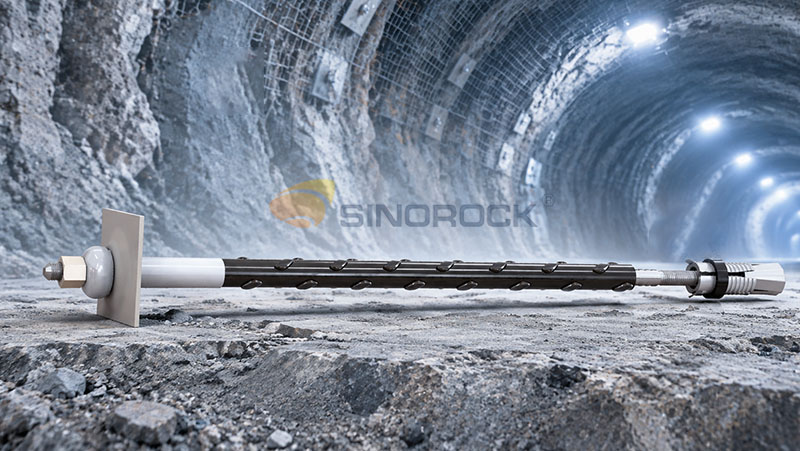
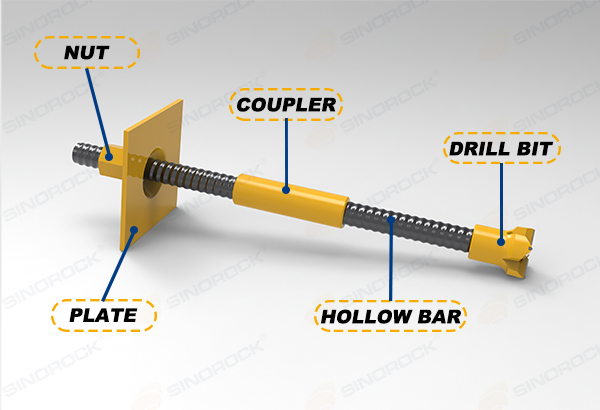
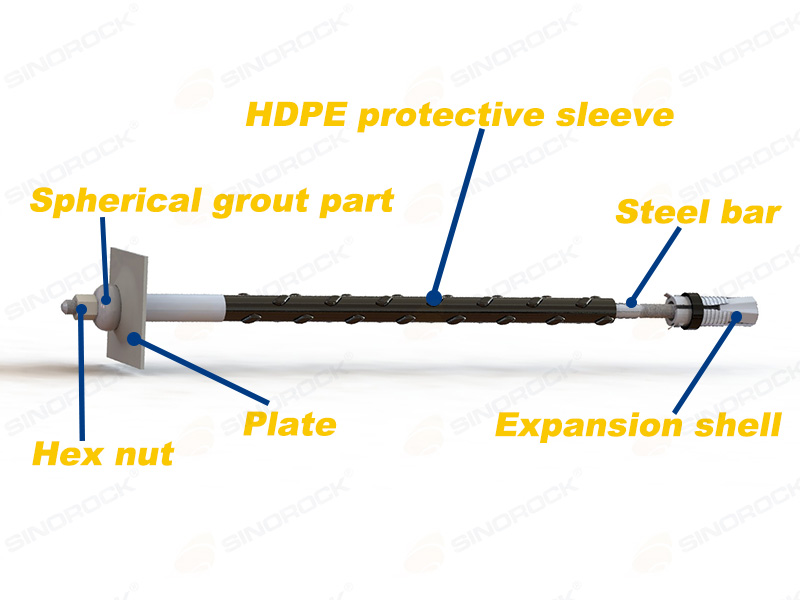
A combination rock bolt consists of a steel reinforcing bar and several functional accessories. Each component contributes to mechanical anchorage, load transfer, grouting, installation, or corrosion protection.
The main components include:
- Steel bar
- Expansion shell
- Hex nut
- Spherical grout part
- Bearing plate
- HDPE protective sleeve
Steel Bar
The steel reinforcing bar is the primary load-bearing component of the system. It transfers tensile forces from the bearing plate and mechanical anchorage assembly into the surrounding rock mass.
The bar is manufactured from high-strength reinforcing steel, with both ends machined with threads to accommodate the associated components.
Key functions:
- Carries tensile loads generated by rock movement and structural loading.
- Connects the expansion shell with the external bearing system.
- Transfers loads through the anchoring and grouting system.
- Provides the structural strength required for long-term reinforcement.
The reinforcing bar can be supplied in different diameters, grades, and thread configurations according to project requirements.
Expansion Shell
The expansion shell is the mechanical anchoring component installed at the embedded end of the bolt.
It expands against the borehole wall to create mechanical resistance and establish the initial anchorage point.
Its main functions are:
- Generating initial mechanical anchorage.
- Providing resistance against bolt withdrawal.
- Enabling the application of preload.
- Supporting the bolt before the grout has cured.
Hex Nut
The hexagonal nut connects the reinforcing bar with the external bearing assembly and is used to apply and maintain the required bolt tension.
It should be designed to provide strength compatible with the reinforcing bar, ensuring reliable load transfer without premature thread failure.
The nut can be customized according to the bolt diameter, thread specification, and project requirements.
Spherical Grout Part
The spherical grout part is an important component of the post-grouting system. The spherical grouting capsule serves two primary functions:
- Providing a connection and passage for grout injection.
- Transferring loads within the bolt assembly.
Its design allows the grouting system to be integrated into the preassembled bolt structure.
The specific port configuration and connection details should be selected according to the grouting equipment and project requirements.
Bearing Plate
The bearing plate is installed on the external side of the anchoring assembly and transfers the force generated by the bolt to the surrounding rock or supporting structure.
It helps distribute concentrated loads over a larger contact area, reducing localized stress on the rock surface.
The plate dimensions, thickness, shape, and load capacity can be customized according to the required support conditions.
HDPE Protective Sleeve
The protective sleeve, referred to as a bubble tube in the product configuration, is manufactured from high-density polyethylene (HDPE).
It forms part of the corrosion protection system by providing a physical barrier around the designated section of the reinforcing bar.
Its functions include:
- Reducing direct exposure of the steel bar to external corrosive agents.
- Providing an additional protective layer within the anchoring assembly.
- Working together with galvanized and epoxy-coated surfaces to improve corrosion resistance.
- Contributing to the durability of the complete anchoring system.
The sleeve’s dimensions and installation arrangement should be coordinated with the grouting assembly.
Pre-Assembled Design and Product Configuration
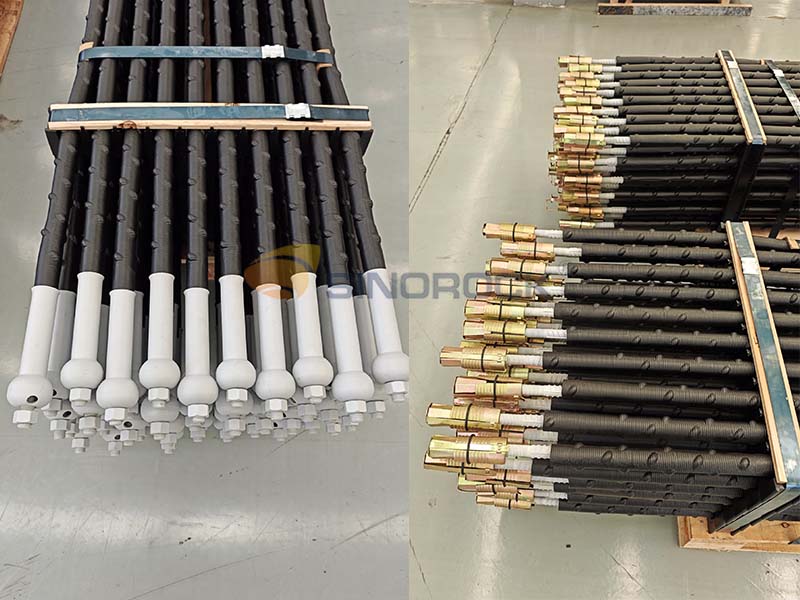
One of the practical features of the combination rock bolt is its pre-assembled configuration.
The main assembly consists of:
- Hexagonal nut
- Spherical grouting capsule
- HDPE protective sleeve
- Expansion shell anchorage assembly
- Steel reinforcing bar
The bearing plate is supplied separately and can be installed by sliding it onto the bolt from the expansion-shell end until it reaches the designated grouting capsule position.
This configuration offers several practical advantages:
Simplified installation: Most major components are assembled before delivery, reducing the number of individual assembly operations required on site.
Reduced component handling: A preassembled configuration makes component management easier during transportation, storage, and construction.
Improved installation consistency: Factory assembly helps maintain the intended component arrangement and reduces the risk of incorrect on-site assembly.
Construction efficiency: Fewer individual installation operations can help streamline the construction process.
The final configuration can be adjusted according to the project design, bolt dimensions, grouting requirements, and corrosion protection specifications.
Technical Specifications and Material Selection
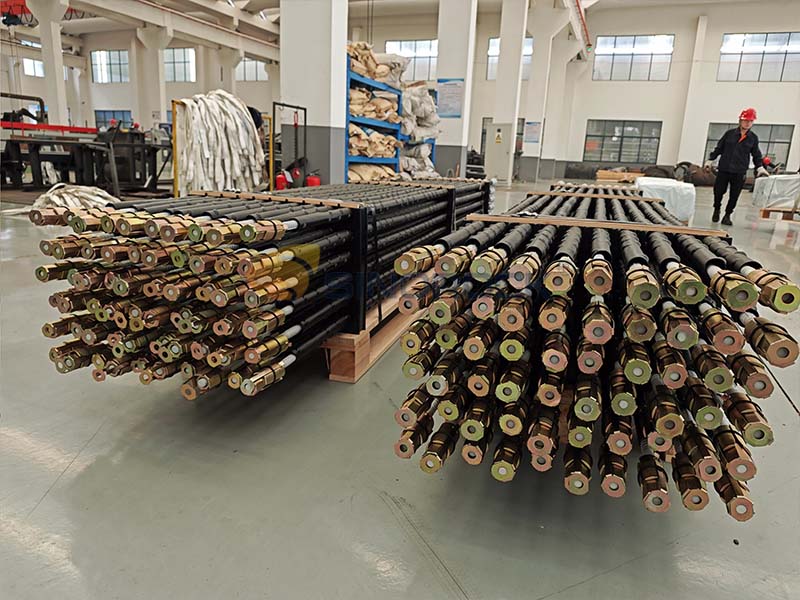
The combination rock bolt can be manufactured in different dimensions and material grades to meet various engineering requirements.
| Item | Technical Specification |
|---|---|
| Reinforcing bar material | HRB400–HRB630 |
| Bar diameter | 16–32 mm |
| Thread specification | M16–M33 |
| Available threads | M16, M18, M20, M22, M24, M27, M30, M33 |
| Thread length | Typically 150–200 mm |
| Maximum reference thread length | ≤300 mm |
| Bar surface treatment | Hot-dip galvanizing + epoxy coating |
Reinforcing Bar Strength
The system uses HRB400–HRB630 reinforcing steel. The higher-strength grades provide greater tensile capacity and allow the system to accommodate different structural loading requirements.
The appropriate steel grade should be selected according to:
- Required tensile capacity.
- Bolt diameter and effective cross-sectional area.
- Project design loads.
- Ground conditions and deformation characteristics.
- Applicable material and construction standards.
Thread Configuration
Both ends of the reinforcing bar are machined with threads. The threaded sections are used for component connections and load transfer within the assembly.
The reference thread specifications range from M16 to M33, covering different reinforcing bar diameters and engineering requirements.
Thread length is typically 150–200 mm, with configurations up to 300 mm available.
Thread dimensions should be coordinated with the nut, grouting capsule, and other connecting components to ensure proper engagement and assembly compatibility.
Key Considerations for Product Selection
When specifying a combination rock bolt, the following parameters should be confirmed:
- Required borehole diameter.
- Reinforcing bar diameter.
- Required tensile load or anchorage capacity.
- Steel bar length
- Steel grade.
- Thread specification and thread length.
- Corrosion protection requirements.
- Bearing plate dimensions.
- Expansion shell configuration.
- Grouting method and associated connections.
These parameters should be considered together rather than selected independently.
Multi-Layer Corrosion Protection System
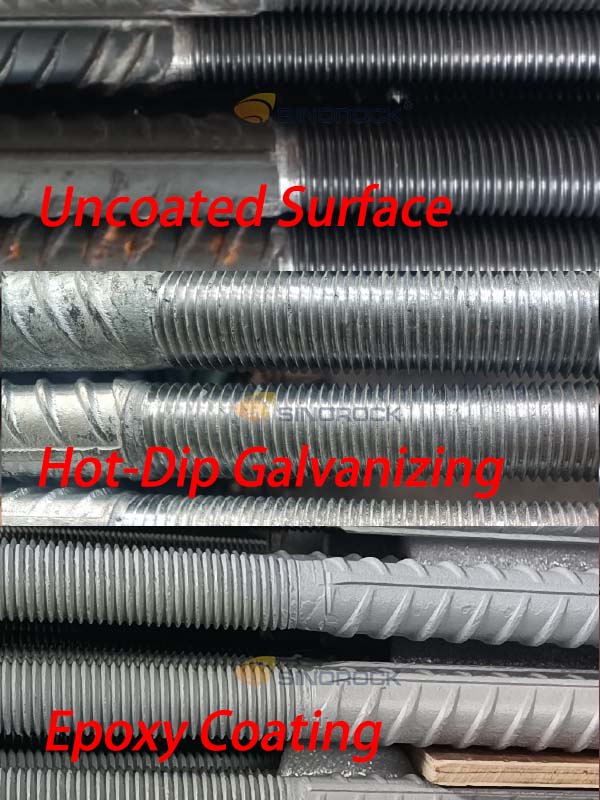
In underground and geotechnical environments, steel reinforcement may be exposed to groundwater, moisture, chlorides, sulfates, and other aggressive substances.
Without adequate protection, corrosion can reduce the effective cross-sectional area of the steel and compromise its load-bearing performance.
To address these challenges, the combination rock bolt adopts a multi-layer corrosion protection system consisting of:
- Hot-dip galvanizing.
- Epoxy coating.
- HDPE protective sleeve.
- Cementitious grout sealing and encapsulation.
Each layer provides a different protective function.
Hot-Dip Galvanizing
Hot-dip galvanizing involves immersing steel components in molten zinc to form a metallurgically bonded zinc coating.
The zinc layer provides two main forms of protection:
Barrier protection: The coating separates the underlying steel from the external environment.
Sacrificial protection: Zinc is more electrochemically active than steel and can provide sacrificial protection when localized coating damage occurs under suitable conditions.
The reference standards include:
- EN ISO 1461 – Hot-dip galvanized coatings on fabricated iron and steel articles.
- GB/T 13912 – Hot-dip galvanized coatings on fabricated iron and steel articles.
Hot-dip galvanizing provides a fundamental corrosion protection layer for the reinforcing bar.
Epoxy Coating
Epoxy coating provides an additional protective barrier against moisture, chemicals, and other corrosive substances.
It works together with the galvanized layer to improve the overall durability of the steel components.
The reference standards include:
- ISO 12944 – Corrosion protection of steel structures by protective paint systems.
- GB/T 30790 – Paints and varnishes: Corrosion protection of steel structures by protective paint systems.
The required epoxy coating thickness should not be treated as a universal fixed value. It needs to be determined according to:
- Environmental corrosivity category.
- Expected service life.
- Selected coating system.
- Surface preparation requirements.
- Coating adhesion and application quality.
HDPE Protective Sleeve
The HDPE protective sleeve provides a physical barrier around the designated steel sections.
Compared with relying exclusively on surface coatings, the sleeve introduces an additional protective element that helps limit direct contact between the steel and surrounding corrosive substances.
Cementitious Grout Protection
After injection and curing, cementitious grout encapsulates the designated anchoring sections and helps reduce the exposure of the steel reinforcement to external environmental agents.
The effectiveness of this protection depends on adequate grout filling, curing, and the absence of significant voids or defects.
This integrated approach makes the combination rock bolt suitable for projects where corrosion resistance and long-term durability are important design considerations.
Installation Procedure
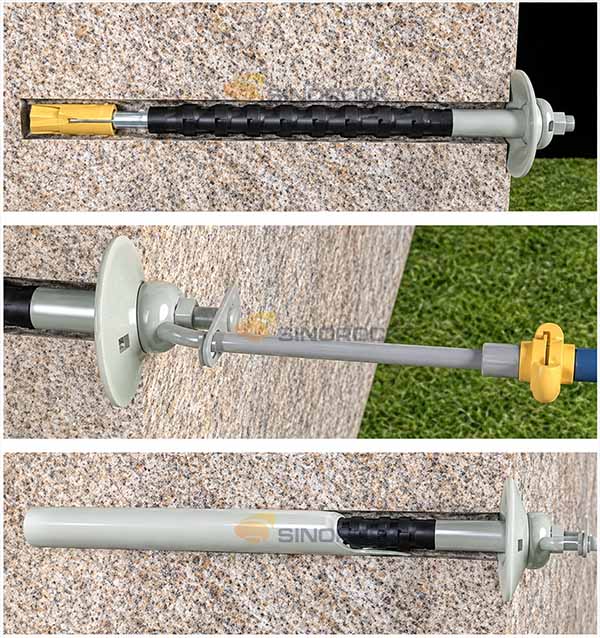
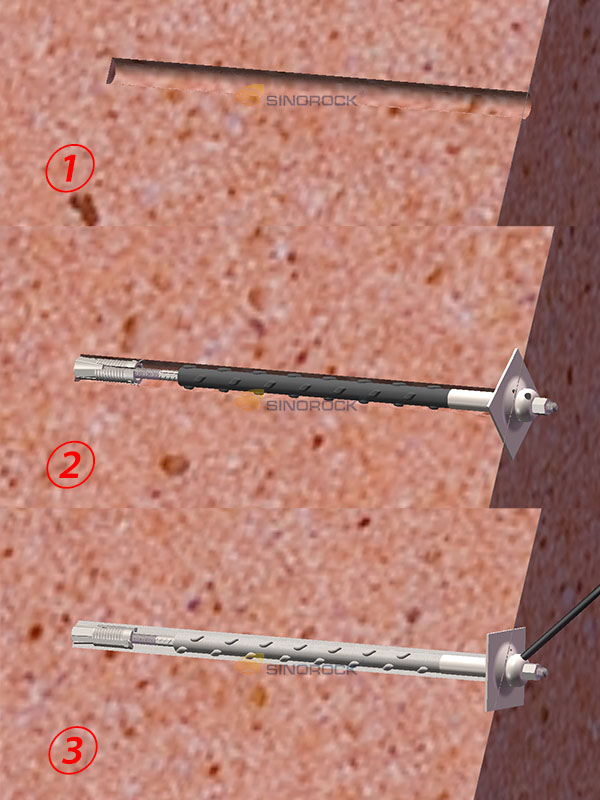
The combination rock bolt follows a mechanical anchoring and post-grouting installation process. The general construction sequence consists of five stages:
Step 1: Drilling
Drill a borehole into the rock mass according to the engineering design. The borehole diameter, depth, direction, and alignment must be compatible with the combination rock bolt.
Step 2: Bolt Insertion
Insert the preassembled combination rock bolt into the prepared borehole. Ensure that the expansion shell reaches its intended anchoring position and that the external components are correctly arranged.
Step 3: Mechanical Anchorage and Tensioning
Activate the expansion shell to establish mechanical contact with the borehole wall. Rotate the reinforcing bar or use the specified installation procedure to develop the required anchoring force and preload.
The installation process must ensure that the expansion shell is properly engaged before proceeding to grouting.
Step 4: Grouting
Connect the grouting equipment to the designated injection point. Inject cementitious grout through the grouting assembly according to the approved construction procedure. The grout should be distributed throughout the intended spaces around the bolt.
Injection pressure, grout consistency, volume, and completion criteria should be determined according to the project design and site conditions.
Step 5: Grout Curing and Final Anchorage
Allow the grout to cure under the specified conditions. After curing, the grout develops additional bonding and encapsulation around the anchoring system.
The completed bolt assembly provides combined mechanical and grouted reinforcement.
Key Installation Considerations
For reliable installation, several factors require particular attention:
- Borehole diameter must match the expansion shell specifications.
- The borehole must be sufficiently clean to allow proper installation.
- The expansion shell must be correctly activated.
- Preload should meet the engineering design requirements.
- Grouting connections must be properly sealed.
- Grout injection should be monitored to confirm adequate filling.
- Corrosion protection components should not be damaged during handling or installation.
Proper installation is essential because the performance of the complete system depends not only on the material properties but also on the interaction between the mechanical anchorage, grout, and surrounding rock.
Engineering Applications
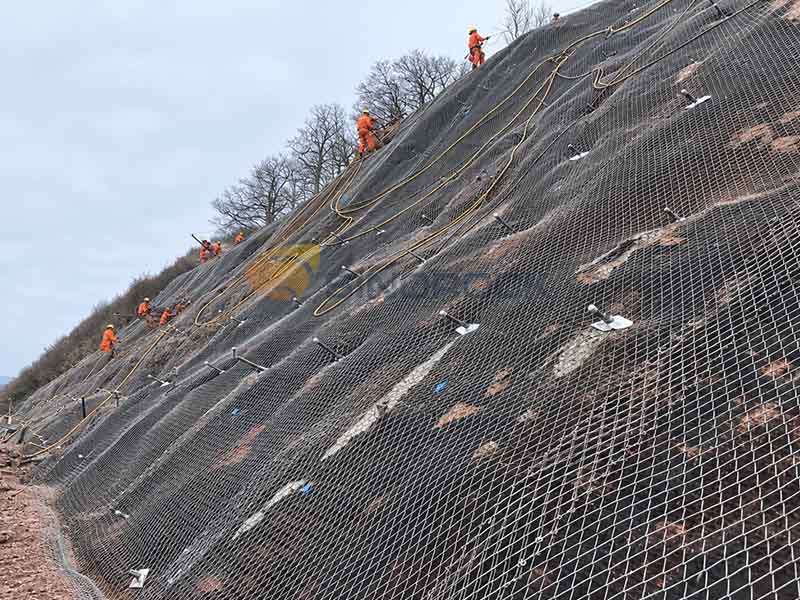
Combination rock bolts are designed for a wide range of geotechnical and underground engineering applications, particularly where mechanical anchorage, post-grouting, and enhanced corrosion protection are required.
Tunnel Engineering
In tunnel construction, surrounding rock may experience stress redistribution, deformation, water infiltration, and deterioration after excavation. Combination rock bolts can be used for initial support and subsequent reinforcement to improve the stability of the surrounding rock.
Typical applications include:
- Road and railway tunnel reinforcement.
- Underground tunnel support.
- Secondary reinforcement of tunnel linings and surrounding rock.
- Underground transportation infrastructure.
- Subsea tunnel projects.
The mechanical anchorage mechanism provides initial support, while subsequent grouting contributes to long-term reinforcement and protection.
For tunnels exposed to groundwater or aggressive environmental conditions, the multi-layer corrosion protection system can be an important consideration in selecting the anchoring solution.
Mining and Underground Excavations
Mining operations frequently involve complex geological conditions, changing stress distributions, and potentially aggressive underground environments.
Combination rock bolts can be used for roof and sidewall reinforcement in underground mine roadways and excavations.
Typical applications include:
- Coal mine roadway support.
- Metal mine underground reinforcement.
- Roof and sidewall stabilization.
- Underground chambers and caverns.
- Long-term reinforcement of underground openings.
The mechanical anchorage provides an initial support connection, while post-grouting contributes to the development of a more comprehensive anchoring system.
For deep mining operations, the bolt diameter, steel grade, anchorage capacity, and corrosion protection should be selected according to the actual ground stress and geological conditions.
Rock Slope Stabilization
Rock slopes may become unstable due to discontinuities, weathering, groundwater infiltration, and external loading. Combination rock bolts can be installed to reinforce unstable rock masses and improve their resistance to movement.
Typical applications include:
- Highway and railway cut slopes.
- Mountain road stabilization.
- Rockfall prevention systems.
- Infrastructure slope reinforcement.
- Long-term stabilization of fractured rock masses.
The mechanical anchoring system provides an initial connection to the rock mass, while grouting helps improve the interaction between the bolt and surrounding ground.
Subsea Tunnels and Coastal Infrastructure
Subsea tunnels and coastal infrastructure projects often face particularly demanding corrosion conditions. The presence of saline groundwater, chloride ions, moisture, and other aggressive environmental agents can accelerate the corrosion of conventional steel reinforcement.
A combination rock bolt incorporates multiple protective layers, making it a potential reinforcement solution for:
- Subsea tunnel reinforcement.
- Coastal underground structures.
- Marine infrastructure foundations.
- Underground structures in saline environments.
- Coastal transportation projects.
The combination of galvanizing, epoxy coating, HDPE protection, and cementitious encapsulation provides a comprehensive approach to corrosion protection.
Other Geotechnical and Underground Applications
Beyond tunnels, mining, and slope reinforcement, combination rock bolts may also be considered for:
- Underground hydropower caverns.
- Underground storage facilities.
- Water conservancy projects.
- Foundation reinforcement.
- Underground chambers and infrastructure support.
The suitability of the system depends on the required anchorage mechanism, ground conditions, structural loading, and corrosion environment.
Combination Rock Bolt vs. Conventional Mechanical Rock Bolt
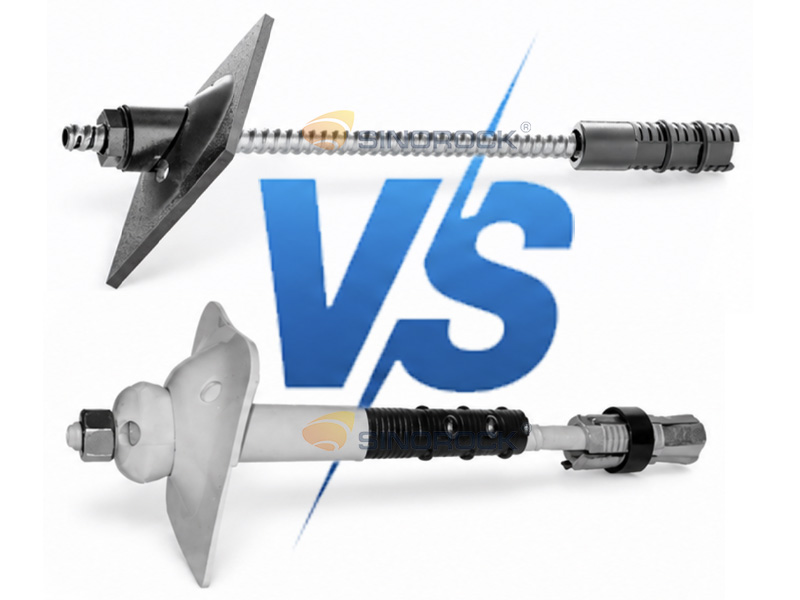
Although both systems use mechanical anchorage, their reinforcement mechanisms and long-term performance considerations are different.
| Comparison | Conventional Mechanical Rock Bolt | Combination Rock Bolt |
|---|---|---|
| Primary anchorage | Mechanical end anchorage | Mechanical end anchorage + grouting |
| Initial support | Yes | Yes |
| Post-grouting | Not normally included | Integrated into the system |
| Load transfer | Primarily through the mechanical anchorage | Mechanical anchorage and additional grout bonding |
| Corrosion protection | Depends on product configuration | Multi-layer protection available |
| Long-term reinforcement | Depends on anchorage and environmental protection | Designed to combine mechanical and grouted reinforcement |
| Typical applications | Hard-rock and temporary support | Long-term underground and geotechnical reinforcement |
The main difference is that a combination rock bolt incorporates a dedicated post-grouting system and additional corrosion protection components.
It therefore offers a more comprehensive reinforcement solution for projects where initial mechanical anchorage alone may not satisfy long-term support requirements.
Combination Rock Bolt vs. Self-Drilling Anchor Bolt
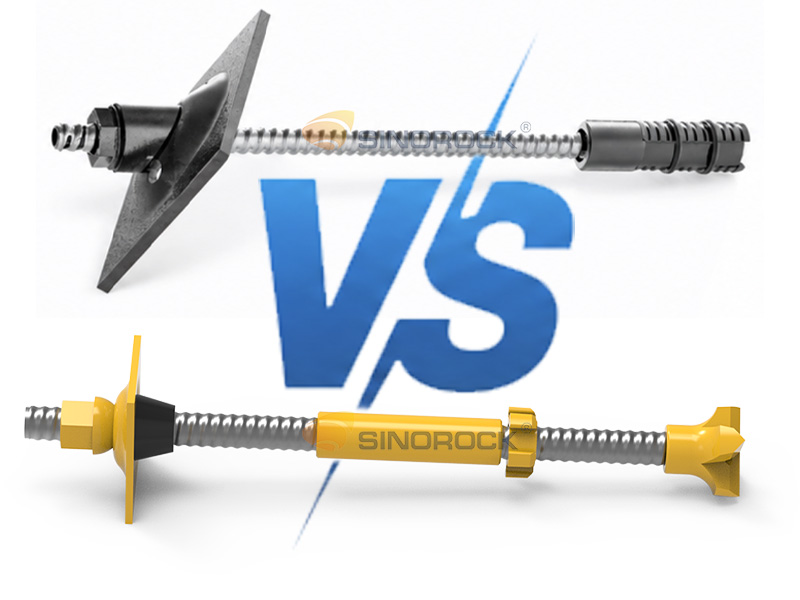
Combination rock bolts and self-drilling anchor bolts both provide grouted reinforcement, but they are based on different construction principles.
| Comparison | Combination Rock Bolt | Self-Drilling Anchor Bolt |
|---|---|---|
| Basic structure | Solid reinforcing bar with mechanical anchorage assembly | Hollow threaded steel bar |
| Drilling method | Separate drilling followed by bolt insertion | Drilling and installation integrated |
| Drill bit | Separate drilling tool | Sacrificial drill bit |
| Initial anchorage | Expansion shell | Primarily through grouting |
| Grouting sequence | Post-grouting after mechanical anchorage | Usually during or immediately after drilling |
| Main advantage | Immediate mechanical anchorage and additional grouted reinforcement | Efficient installation in difficult and fractured ground |
| Typical application considerations | Projects requiring mechanical anchorage and long-term corrosion protection | Projects requiring drilling, grouting, and anchoring in one integrated system |
When Should You Choose a Combination Rock Bolt?
A combination rock bolt may be suitable when:
- Immediate mechanical anchorage is required.
- The project requires subsequent grouting.
- Long-term corrosion protection is an important consideration.
- The ground conditions allow the use of a conventional pre-drilled borehole.
- The project requires a combination of mechanical and grouted reinforcement.
When Should You Choose a Self-Drilling Anchor Bolt?
A self-drilling anchor bolt may be more suitable when:
- Ground conditions are loose, fractured, or unstable.
- Borehole collapse makes separate drilling and bolt insertion difficult.
- Construction space is restricted.
- Drilling, grouting, and anchoring need to be integrated into one operation.
- Conventional drilling methods are inefficient or unreliable.
The two systems serve different engineering requirements. Selection should be based on geological conditions, construction methods, structural loading, durability requirements, and overall project economics.
Quality Control and Performance Verification
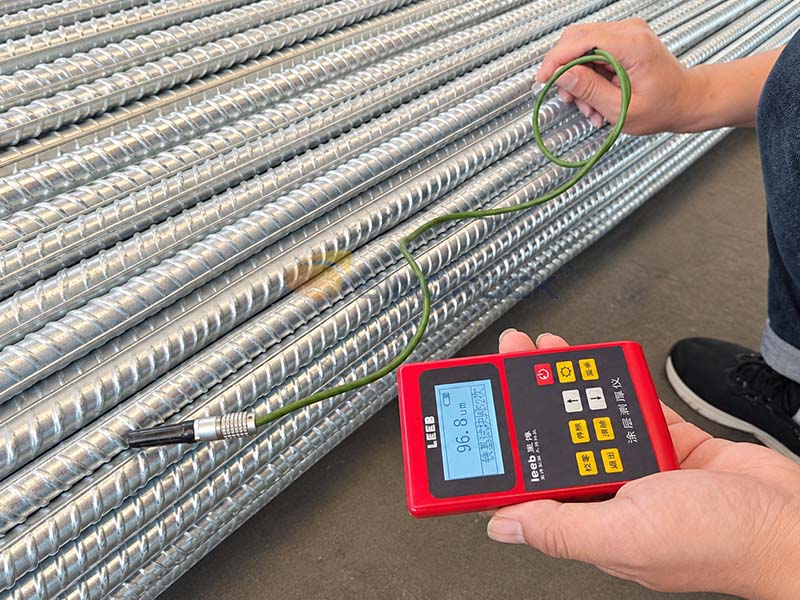
The reliability of a combination rock bolt depends on the quality of its individual components and the performance of the assembled system. Quality control should cover the entire manufacturing and installation process.
Raw Material Inspection
The reinforcing bar should be inspected to verify:
- Material grade.
- Chemical composition.
- Mechanical properties.
- Diameter and dimensional tolerances.
- Surface condition.
The material certificates and inspection records should be reviewed to confirm compliance with the specified requirements.
Thread and Component Inspection
The threaded sections should be checked for dimensional accuracy, thread integrity, and compatibility with the corresponding nuts and connecting components.
The expansion shell, grouting capsule, and bearing plate should also undergo dimensional and visual inspections.
Galvanizing and Epoxy Coating Inspection
The corrosion protection system requires particular attention. Relevant inspection items include:
- Zinc coating thickness and uniformity.
- Epoxy coating thickness.
- Surface preparation.
- Coating continuity.
- Adhesion performance.
- Damage caused during transportation and installation.
The inspection criteria should follow the specified coating standards and project requirements.
Mechanical Performance Testing
The mechanical performance of the complete anchoring assembly should be verified through appropriate testing.
Depending on the project requirements, testing may include:
- Tensile strength testing.
- Thread connection strength testing.
- Expansion shell anchorage testing.
- Pull-out testing.
- Grouting performance verification.
- Complete assembly load testing.
Testing the complete assembly is important because the overall anchoring capacity is influenced by the interaction of multiple components rather than the reinforcing bar alone.
CE Conformity Assessment
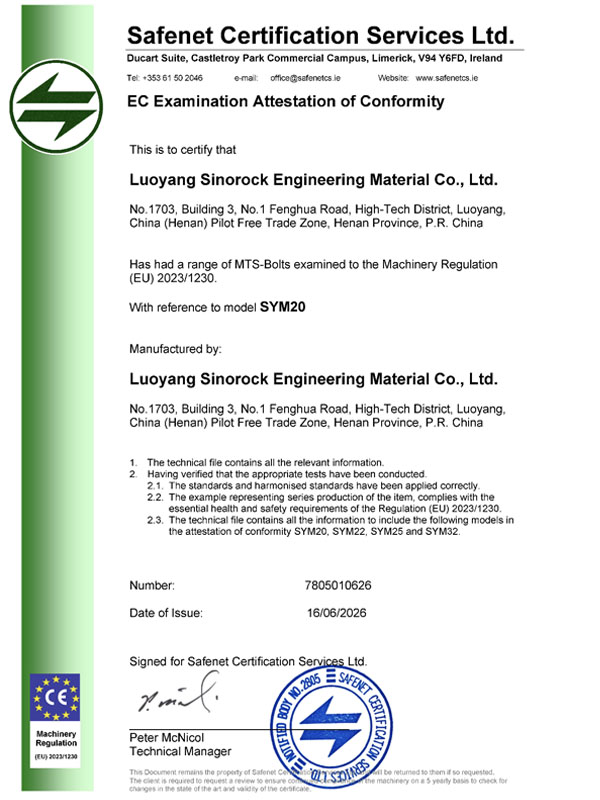
Sinorock’s combination rock bolt product range has undergone conformity assessment in accordance with the Machinery Regulation (EU) 2023/1230. The examination was conducted by Safenet Certification Services Ltd., with reference to models SYM22, SYM25, and SYM32.
This provides customers with documented evidence of the product range’s conformity assessment and reflects Sinorock’s commitment to product quality, safety, and compliance with applicable European requirements.
Conclusion
The combination rock bolt is a versatile rock reinforcement system that integrates mechanical end anchorage, post-grouting, and multi-layer corrosion protection.
By combining immediate mechanical support with subsequent grouted reinforcement, it provides a practical solution for underground and geotechnical engineering projects requiring reliable anchorage and long-term durability.
Looking for a Combination Rock Bolt solution for your project? Contact Sinorock to discuss your technical requirements, product specifications, and customized anchoring solutions.